

Introduction
A bathroom renovation in Vancouver typically takes 6 to 12 weeks from initial planning to final walkthrough, with the actual construction phase lasting 3 to 6 weeks depending on project scope. Including planning and permitting, the renovation timeline can extend to 8 to 20 weeks for complex projects involving layout changes, plumbing relocation, or custom materials.
This guide covers realistic timelines for every stage of a Vancouver bathroom renovation – from the planning and design phase through permits, material ordering, construction, and final inspections. It addresses the local factors that make bathroom renovation in Vancouver different from generic estimates: City of Vancouver permit processing, strata approval requirements for condo bathroom projects, older home infrastructure challenges, and seasonal contractor availability across Metro Vancouver.
The direct answer: Most Vancouver bathroom renovations take 8 to 10 weeks total when you account for design, permits, materials, and construction. A basic bathroom refresh takes 1 to 2 weeks of construction time, while standard full renovations take 2 to 4 weeks and larger ensuites can take 5 to 6 weeks to complete.
Here’s what you’ll learn from this guide:
-
Realistic timelines broken down by renovation scope, from powder room refreshes to full gut renovations
-
Vancouver-specific factors that influence your bathroom renovation timeline, including permits, strata rules, and contractor demand
-
Step-by-step phase breakdowns so you know exactly what happens each week
-
Common delay factors and how to prevent them from derailing your renovation project
-
Practical strategies for keeping your project on schedule and preparing your household for the disruption
Understanding Bathroom Renovation Timeline Phases in Vancouver
Every bathroom renovation follows a predictable sequence of phases: planning and design, permits and approvals, material procurement, construction, and final inspections. The total duration depends on how long each phase takes – and in Vancouver, several of these phases carry local considerations that extend timelines beyond what you might read in generic renovation guides.
Total Project Timeline vs Construction Time
The most important distinction Vancouver homeowners need to understand is the difference between the total project timeline (6–12 weeks or more) and the construction period (3–6 weeks). A standard bathroom renovation in Vancouver takes about 3 to 8 weeks of active construction, but the pre-construction phases – planning, design, building permits, strata approvals, and material ordering – often take as long as the construction itself.
Pre-construction phases typically include:
-
Planning and design: 1–4 weeks for initial consultation, site assessment, design development, and material selection
-
Permits and approvals: 1–6 weeks depending on project complexity and whether strata approval is required
-
Material ordering and delivery: 2–8 weeks, with custom cabinetry and imported tile at the longer end
Many metro Vancouver homeowners underestimate these pre-construction timelines. A homeowner who expects a six-week total project but hasn’t accounted for permit processing or material lead times will find themselves frustrated before demolition even begins.
Vancouver-Specific Timeline Factors
Several factors make Vancouver bathroom renovation timelines distinct from those in other Canadian cities. The City of Vancouver has its own permitting structure, including the Residential Renovation Fast Track (RRFT) program that processes eligible permits in a median of 3 days. However, most bathroom renovations need at least a plumbing permit, and more complex applications involving electrical work or structural changes can take 2 to 4 weeks or longer.
For condo renovations, strata approval requirements add another layer. Nearly every strata corporation in Vancouver requires written approval for renovations that involve plumbing, electrical, or work touching common property. This process typically adds 2 to 4 weeks – or 6 to 8 weeks if submissions miss strata council meeting cycles.
Contractor availability also plays a role. Peak renovation season in Metro Vancouver runs from late spring through fall, when experienced contractors, plumbers, electricians, and tile installers carry saturated schedules that can push project start dates.
Bathroom Renovation Timeline by Project Scope
Project scope significantly impacts renovation duration; simple updates are quicker than full gut jobs. Understanding where your renovation project falls on the scope spectrum is the single best predictor of how long the work will take.
A full bathroom renovation in Vancouver costs $18,000 to $45,000, and the budget you allocate directly correlates with the complexity and duration of the work. Below are the four main scope categories with realistic Vancouver timelines.
Cosmetic Bathroom Updates (4–6 Weeks Total)
A cosmetic update refreshes your existing bathroom without changing the bathroom layout or relocating plumbing lines. This scope typically includes painting, swapping existing fixtures for new fixtures, replacing a stock vanity, updating lighting, and possibly installing new floor tile – all while keeping plumbing and electrical in their current locations.
Timeline breakdown:
-
Planning and material selection: 1–2 weeks
-
Materials and delivery: 1–2 weeks
-
Construction: 1–2 weeks
Cosmetic updates generally avoid major permits, which keeps the approval timeline short. Simple projects may qualify for the City’s online Fast Track stream for permits. This is the fastest scope for a powder room refresh or updating a dated but structurally sound existing bathroom. Powder room renovations usually range from $8,000 to $15,000 and often deliver the highest ROI – making them an attractive starting point for Vancouver homeowners looking to add value without a lengthy timeline.
Standard Bathroom Renovations (6–10 Weeks Total)
A mid-range bathroom renovation is the most common scope in Vancouver homes. It includes full wall tile and floor tile replacement, new plumbing fixtures, updated lighting, and a new vanity – but keeps the existing layout intact. You might install a walk-in shower where a tub-shower combo previously sat, add a soaker tub, or upgrade shower walls, but the plumbing stays in roughly the same positions.
Timeline breakdown:
-
Planning and design: 2–3 weeks
-
Permits and material ordering: 2–4 weeks (often overlapping)
-
Construction: 3–5 weeks
Mid-range bathroom renovations typically cost between $25,000 and $40,000. Most projects in this category require a plumbing permit and potentially an electrical permit. Permit processing can add 1 to 4 weeks to timelines. A building permit is required for structural changes, though standard renovations without layout changes usually avoid this requirement.
Mid-range bathroom renovations return 80–115% of their cost at resale, making them a strong investment for Metro Vancouver homeowners.
Full Bathroom Remodels (8–12 Weeks Total)
A full bathroom renovation or full gut renovation involves tearing the space down to studs and rebuilding it – often with layout changes, plumbing relocation, electrical upgrades, and structural work. This might mean moving a shower drain to accommodate a custom shower, relocating a toilet, adding a double vanity where a single previously sat, or expanding the bathroom’s square foot area.
Timeline breakdown:
-
Planning and design: 3–4 weeks
-
Permits and approvals: 3–5 weeks
-
Construction: 4–6 weeks
Complex renovations involving layout changes can push timelines significantly longer than 8 weeks, particularly when plumbing relocation is involved. Rerouting plumbing adds $3,000 to $6,000 to renovation costs, and moving a toilet typically costs $2,500 to $5,000 in Vancouver. These changes require plumbing permits and inspections that add scheduling dependencies to the construction timeline.
A building permit is required for structural changes like removing or modifying walls, and permit processing for these more complex applications typically takes 2 to 4 weeks through the City of Vancouver.
Luxury Custom Renovations (10–16+ Weeks Total)
Luxury and custom bathroom renovations incorporate high-end finishes, custom cabinetry, imported stone or custom tile, premium fixtures like a freestanding tub or frameless glass shower enclosure, heated floor systems, and specialty installations. Custom finishes and materials often add time beyond standard installs due to extended material lead times and the need for specialized trades.
Timeline breakdown:
-
Planning and design: 4–6 weeks
-
Custom material ordering: 4–8+ weeks (custom glass, imported tile, custom millwork)
-
Construction: 6–8+ weeks
Luxury bathroom remodels can exceed $65,000 in Vancouver. European tile suppliers may quote 8 to 16 weeks for delivery depending on stock status, and custom vanities or millwork typically require 6 to 10 weeks of lead time. These extended material lead times are often the primary driver of the longer overall project duration.
It’s worth noting that luxury bathroom renovations return only 60–80% at resale, while master ensuite renovations return 90–130% of their cost. Adding a bathroom can return 110–160% of its cost – Vancouver homeowners should weigh these figures when setting bathroom renovation budgets.
|
Renovation Scope |
Construction Time |
Total Project Timeline |
Typical Cost Range |
|---|---|---|---|
|
Cosmetic refresh |
1–2 weeks |
4–6 weeks |
$8,000–$15,000 |
|
Mid-range renovation |
3–5 weeks |
6–10 weeks |
$25,000–$40,000 |
|
Full gut renovation |
4–6 weeks |
8–12 weeks |
$18,000–$45,000 |
|
Luxury/custom |
6–8+ weeks |
10–16+ weeks |
$65,000+ |
Step-by-Step Bathroom Renovation Timeline
Understanding what happens at each phase – and why each step is necessary – helps you set realistic expectations and make timely decisions. Here’s a detailed phase-by-phase breakdown with realistic Vancouver timeframes. Most bathroom renovations involve planning, design, and approval before construction begins, so don’t expect to pick up a hammer on day one.
Planning and Design Phase (1–4 Weeks)
The planning and design phase sets the foundation for everything that follows. Rushing this phase is the single most common cause of delays later in the renovation process.
-
Initial consultation and site assessment (3–5 days): A qualified contractor or designer visits your home, takes measurements, evaluates the condition of your existing bathroom, and discusses your goals. This is when you’ll identify whether your project involves simple updates or requires structural changes.
-
Design development and material selection (1–2 weeks): Selecting wall tile, floor tile, fixtures, vanity style (stock vanity vs. custom cabinetry), shower details (custom shower, walk-in shower, shower glass door options), and finishes. If you’re considering heated floors, a double vanity, or a freestanding tub, these choices need to be made now – not during construction.
-
Contract finalization and project scheduling (3–7 days): Reviewing the scope of work, confirming the bathroom renovation cost, and establishing the construction schedule.
Thorough planning during this phase directly reduces the risk of scope changes and decision delays during construction. 4 Local Homes is a helpful resource for Vancouver homeowners researching renovation projects and understanding what to expect before committing to a contractor.
Permits and Approvals (1–6 Weeks)
Permit requirements depend on your project scope and whether you live in a house or condo. Permit processing can take 1 to 4 weeks in Vancouver, and strata approvals can add additional time.
-
Building permits (1–3 weeks processing): Required for structural changes, wall modifications, or layout changes. The City of Vancouver’s RRFT program can process simpler permits in as little as 3 days, but more complex applications take 2 to 4 weeks. Permit fees for a $30,000 renovation total approximately $1,100 to $1,300.
-
Plumbing and electrical permits (3–10 days processing): Most bathroom renovations need at least a plumbing permit. Electrical work permits are required for new circuits, panel upgrades, or relocating outlets and switches.
-
Strata approvals for condos (2–6 weeks): Strata rules can impact timing in condo or townhouse renovations due to work-hour restrictions, insurance requirements, and approval processes. Strata councils typically meet monthly – if you miss a meeting cycle, you may wait an additional full month.
-
EnerGuide evaluation: Renovations over $20,000 trigger an EnerGuide evaluation, which adds a scheduling step that should be factored into your timeline.
Material Ordering and Delivery (2–8 Weeks)
Material lead times vary enormously depending on whether you’re using stock products or custom items. Experienced contractors order long-lead materials while permits are under review to avoid dead time between approval and construction start.
-
Stock materials (1–2 weeks): Standard tile, stock vanity units, basic plumbing fixtures, and off-the-shelf shower glass door panels
-
Custom vanities and millwork (4–8 weeks): Custom cabinetry and built-in storage
-
Specialty tile and imported fixtures (6–12 weeks): Custom tile work, imported stone, premium fixtures, and custom glass shower enclosures
Tile installation costs $12 to $25 per square foot in Vancouver – but this cost is irrelevant if the tile hasn’t arrived when construction begins. Material delays can create pauses in the renovation timeline that frustrate homeowners and contractors alike. Coordinate delivery dates with your contractor’s construction schedule to prevent gaps.
Construction Phase Timeline
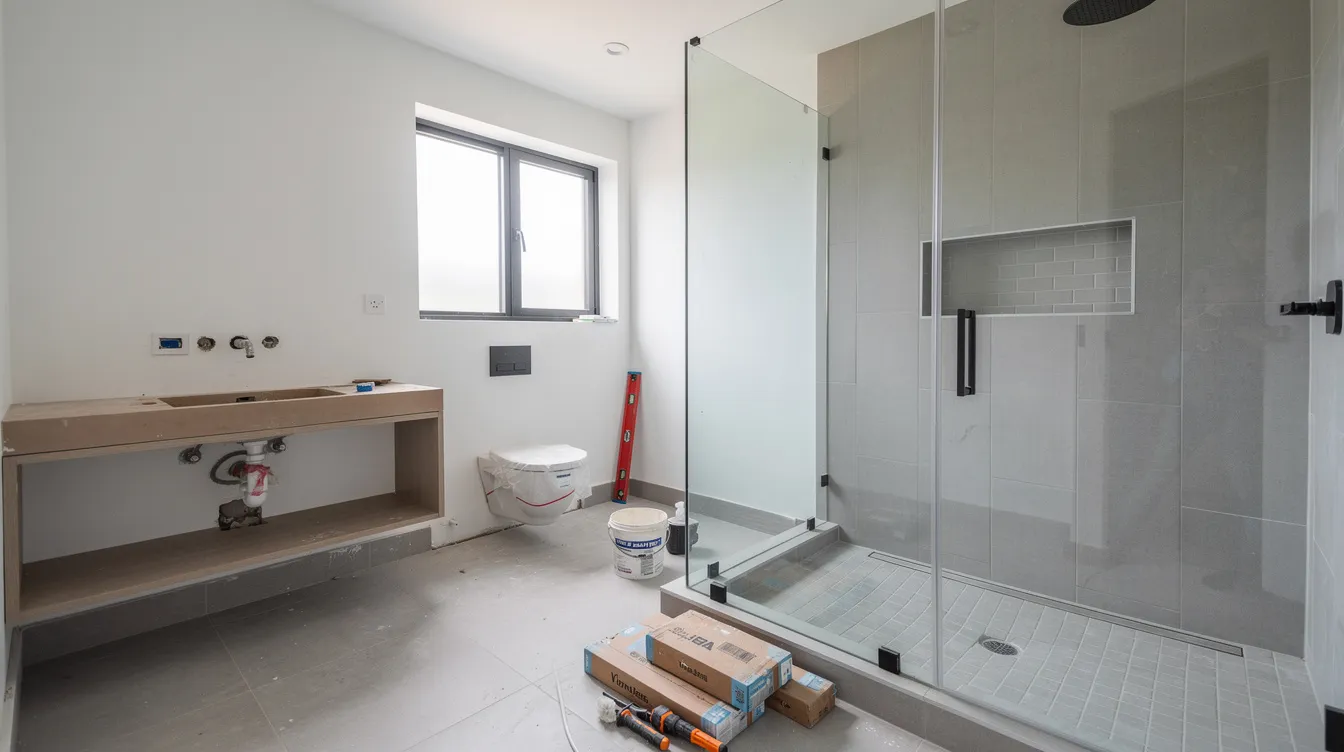
Typical construction phases include demolition, rough-in, waterproofing, tiling, fixture installation, and final inspections. Here’s what each week looks like for a mid-range full renovation:
Construction Week 1: Demolition and Rough-In
-
Day 1–2: Demolition and debris removal. Demolition typically takes 1 to 3 days. Existing fixtures, tile, vanity, and sometimes drywall are removed. This is when hidden problems – water damage, mold, outdated plumbing, or asbestos – are discovered.
-
Day 3–4: Plumbing rough-in. New plumbing lines are installed or existing ones modified. If plumbing relocation is part of the scope, this phase takes longer. Rough plumbing and electrical work typically takes 2 to 7 days.
-
Day 5: Electrical rough-in. New wiring, outlets, lighting boxes, heated floor systems wiring, and ventilation fan connections are installed. Inspection bookings are submitted.
Construction Week 2: Infrastructure and Waterproofing
-
Day 1–2: Framing adjustments and backer board installation. Any structural modifications, insulation upgrades, or new wall framing is completed. Cement backer board goes up on shower walls and floor areas.
-
Day 3–4: Waterproofing membrane installation. The shower pan, shower walls, and floor areas receive waterproofing treatment. This is a critical step – waterproofing requirements in Vancouver are strict and inspectable.
-
Day 5: Cure time and inspection. Waterproofing and tile setting typically takes 1 to 2 weeks including curing time. Waterproofing must cure before tile can be applied.
Construction Week 3–4: Tile Installation and Fixtures
-
Week 3: Floor and wall tile installation. Tile installers lay floor tile and wall tile according to the design plan. Custom tile work or complex patterns (herringbone, large-format tile) take longer than standard layouts. A shower pan liner is verified before tiling begins in wet areas.
-
Early Week 4: Grout application and curing. Grout must cure properly – rushing this step leads to cracking and long-term water damage.
-
Late Week 4: Fixture installation and plumbing connections. The new vanity, shower valve, shower drain connections, toilet, and plumbing fixtures are installed and tested.
Construction Week 4–5: Finishing and Final Inspections
-
Painting and trim installation. Touch-up painting, baseboard installation, and door trim are completed.
-
Mirror, hardware, and accessory mounting. Towel bars, toilet paper holders, shower glass door hardware, and mirrors go in.
-
Final inspections and punch list. Final inspection and punch list typically take 1 to 3 days. The contractor walks through the finished bathroom with you to identify any deficiencies.
-
Project cleanup and homeowner walkthrough. Debris removal, final cleaning, and warranty paperwork.
Common Factors That Delay Bathroom Renovations in Vancouver
Delays are a normal part of renovation projects – understanding the most common causes helps you build realistic buffer time into your schedule. Plan for 1 to 2 extra weeks beyond your target completion date.
Material and Supply Delays
Backorders on popular fixtures and specialty materials are among the most frequent causes of construction pauses. Shipping delays from overseas suppliers remain common, particularly for European tile, custom glass, and premium fixtures. Seasonal demand spikes during spring and summer further strain local supplier inventory.
Solutions: Order materials immediately after design approval – don’t wait for permits to be issued. Select backup materials for critical items like tile and fixtures. Ask your contractor about material lead times during the initial consultation and factor them into your schedule.
Permit and Inspection Delays
Incomplete permit applications requiring resubmission are a preventable but common delay. Missing documents – trade drawings, insurance certificates, or contractor licenses – trigger rejection and resubmission cycles that add weeks. Inspector availability and scheduling conflicts, particularly during peak season, can push inspection dates. Failed inspections requiring corrections and re-inspection create cascading delays for downstream trades.
Solutions: Work with experienced contractors who understand City of Vancouver permit requirements. Submit complete applications the first time. Book inspections early and have backup dates ready.
Unexpected Structural Issues
Older homes may reveal hidden issues like water damage that affect timelines. Vancouver has many homes built before the 1980s, and demolition frequently uncovers surprises: mold behind shower walls, outdated plumbing requiring full replacement, electrical code compliance issues, or asbestos in old flooring and pipe insulation. Asbestos abatement alone can add days to weeks and a few hundred dollars to several thousand dollars in unplanned costs.
Solutions: Budget 10–15% contingency in both time and money. An experienced contractor will flag high-risk areas during the initial consultation before providing a final bathroom renovation cost estimate.
Scope Changes and Decision Delays
Mid-project material or layout changes are the delay factor most within homeowners’ control – and one of the most disruptive. Changing from a stock vanity to custom cabinetry mid-construction can add 6 to 8 weeks of waiting. Switching tile selections after demolition means reordering and potentially rescheduling tile installers.
Solutions: Finalize all material and fixture selections before construction begins. Locking in design and materials early can help keep the project on track. If you’re undecided on shower details or fixture finishes, resolve those decisions during the planning and design phase – not when your bathroom is down to studs.
Vancouver-Specific Factors Affecting Timeline
Beyond the universal renovation challenges, several factors are unique to Vancouver and the Lower Mainland that directly influence how long your bathroom reno takes.
Condominium and Strata Considerations
Condo renovations in Vancouver carry specific logistical and regulatory challenges that detached house renovations don’t face. Strata council approval is required for virtually any renovation that involves plumbing, electrical work, or modifications to common or limited common property.
Key strata-related timeline impacts:
-
Approval timelines: 2 to 4 weeks for moderate projects, up to 6 to 8 weeks for complex submissions or when council meeting schedules don’t align
-
Work hour restrictions: Most strata corporations limit construction to weekdays, typically 8 AM to 5 PM, which reduces productive work hours per week
-
Elevator bookings: Material deliveries and dumpster access require scheduled elevator bookings, which may only be available on specific days
-
Shared plumbing considerations: In high-rise buildings, plumbing work may require water shutoffs affecting other units, which must be coordinated with the strata manager
For a condo bathroom renovation, build an extra 2 to 4 weeks into your timeline specifically for strata-related processes. Owners in North Vancouver and West Vancouver strata buildings should verify their specific corporation’s requirements early – some have more restrictive policies than others.
Older Home Infrastructure Challenges
Vancouver’s housing stock includes significant numbers of character homes and pre-1950s structures with infrastructure that doesn’t meet current building codes. During demolition of an existing bathroom in these homes, contractors frequently discover:
-
Outdated plumbing: Galvanized steel or even lead pipes that must be replaced, adding cost and time. Moving plumbing can add $5,000 to $12,000 to renovation costs in these situations.
-
Knob-and-tube wiring: Requires full electrical replacement in affected areas before new electrical work can proceed
-
Non-compliant framing: Structural modifications needed to bring the space up to code
-
Heritage designation restrictions: Heritage-designated homes in Vancouver may require additional approvals and engineering assessments that add 1 to 2 weeks or more
These hidden conditions are the primary reason that older home renovations trend toward the longer end of the 8–12 week range.
Seasonal and Market Factors
The renovation season in Metro Vancouver follows predictable patterns that affect contractor availability, permit processing speed, and material delivery:
-
Peak season (April–October): Higher demand for contractors means longer waits for project start dates. Plumbers and electricians may be booked 3 to 6 weeks out. Permit processing slows during summer vacation periods.
-
Off-season advantages (November–March): Shorter wait times for trades, faster permit processing, and sometimes more competitive pricing. However, material delivery can be affected by holiday shipping schedules.
-
Real estate market influence: Strong seller’s markets increase renovation demand as homeowners prepare homes for sale, which stretches contractor availability further across the metro Vancouver area.
Labour accounts for 40–50% of total renovation costs in Vancouver, and during peak season, trade availability becomes the primary scheduling constraint. In Vancouver, plumbers charge around $100 to $140 per hour and electricians $95 to $130 per hour – and during busy months, these professionals are in high demand.
How to Keep Your Bathroom Renovation on Schedule
Proactive planning is the most effective tool for preventing timeline overruns. Here are specific strategies that experienced contractors recommend to Metro Vancouver homeowners.
Pre-Construction Planning Strategies
-
Start planning 8–12 weeks before your desired completion date. This gives adequate time for design, permits, and material ordering without rushing.
-
Finalize all material and fixture selections before demolition. Every undecided finish – from wall tile to shower valve to vanity hardware – is a potential delay once construction begins.
-
Order custom items immediately after design approval. Custom cabinetry, custom tile, custom glass shower enclosures, and premium fixtures should be ordered while permit applications are in review so deliveries align with construction start dates.
-
Build 2–3 weeks of buffer into your timeline expectations. This accounts for inspection delays, material shipping issues, or minor scope adjustments without causing stress.
During Construction Best Practices
-
Maintain regular communication with your contractor. Maintenance of open communication with contractors can help manage renovation timelines better. Weekly check-ins and prompt responses to questions keep decisions from becoming bottlenecks.
-
Avoid scope changes once construction begins. Adding a heated floor system, upgrading to a frameless glass shower, or switching from a shower-only to a soaker tub mid-project can add weeks.
-
Ensure material delivery coordination. Confirm delivery dates for all materials before each construction phase begins. Having tile on-site before tile installers arrive prevents expensive scheduling gaps.
-
Be available for quick decisions. During construction, unexpected situations arise – a pipe location that requires a minor layout adjustment, a tile pattern detail that needs confirmation. Respond within hours, not days.
Working with Qualified Professionals
-
Choose experienced contractors with a track record in Vancouver bathroom renovations. Familiarity with City of Vancouver building department processes and strata requirements helps anticipate and avoid compliance problems.
-
Verify proper licensing and insurance. This is particularly important for condo renovations where strata corporations require proof of contractor insurance before approving work.
-
Check references for similar projects. Ask specifically about timeline adherence on past projects of similar project complexity and bathroom size.
-
Understand your contractor’s permit and inspection process. A good contractor handles permit applications, schedules inspections, and coordinates trades – ask how they manage these logistics during the initial consultation.
Preparing Your Home and Family During Renovation
A bathroom renovation disrupts daily routines. Planning ahead for this disruption – especially if you have a single-bathroom household – makes the experience significantly more manageable.
Managing Single Bathroom Households
If you have only one bathroom, the renovation period requires creative solutions:
-
Arrange alternative bathing access before demolition day. This might mean using a gym membership, a neighbour’s bathroom, or setting up a temporary shower arrangement.
-
Coordinate family schedules around renovation phases. The roughest period is the first 1–2 weeks when plumbing is disconnected. Tile installation and finishing phases may allow limited bathroom access.
-
Plan for extended timelines. If your renovation encounters delays, your backup arrangements need to flex. Having a plan B that works for an extra 2 weeks prevents panic if the schedule shifts.
-
Consider phased construction if feasible – some contractors can maintain partial bathroom function during certain construction phases, though this typically adds cost.
Dust and Noise Management
-
Protective measures for the rest of your home: Seal doorways with plastic sheeting and use zip walls to contain demolition dust. A reputable contractor will set up proper containment as part of their process.
-
Understand the noisiest phases: Demolition (days 1–3) and tile cutting are the loudest. Rough-in plumbing and electrical work generate moderate noise. Finishing phases are relatively quiet.
-
Communicate with neighbours about construction hours, particularly in condos where noise travels through shared walls and floors. This is both courteous and often required by strata bylaws.
-
Set daily cleanup expectations with your contractor. End-of-day cleanup prevents dust from migrating through your home and makes the construction period more livable.
Frequently Asked Questions About Bathroom Renovation Timelines in Vancouver
Timeline Duration Questions
What’s the fastest possible bathroom renovation timeline? A basic bathroom refresh takes 1 to 2 weeks of construction time. With minimal permit requirements and readily available materials, the total project timeline for a cosmetic update can be as short as 4 weeks. However, this assumes no plumbing relocation, no layout changes, and all materials are in stock locally.
How long do luxury bathroom renovations take? Luxury and custom renovations typically take 10 to 16+ weeks total. The extended timeline is driven primarily by material lead times – custom cabinetry, imported stone, and premium fixtures often require 6 to 12 weeks for fabrication and delivery. Construction itself takes 6 to 8+ weeks due to the precision required for custom tile work, heated floors, and specialty installations.
Do condo renovations take longer than house renovations? Often, yes. Condo bathroom renovations add strata approval processes (2–6 weeks), work hour restrictions that reduce productive construction time, and logistical constraints like elevator bookings for material delivery. A mid-range condo bathroom renovation typically takes 6 to 10 weeks total, compared to 5 to 8 weeks for a comparable scope in a detached house.
Delay and Planning Questions
What’s the most common cause of renovation delays? Material delays and indecisive finish selections are the two most common causes. Ordering tile, fixtures, or a new vanity after construction starts – rather than during the planning phase – creates dead time when trades cannot work. The second most common cause is incomplete permit or strata applications that require resubmission.
How much buffer time should I plan for? Plan for 2 to 3 weeks of buffer beyond your contractor’s estimated timeline. This accommodates inspection scheduling, minor material delays, and any hidden conditions discovered during demolition. Total project timelines can reach 4 to 8 weeks or more even for straightforward renovations.
Can I stay in my home during the renovation? Yes, in most cases. If you have a second bathroom, the disruption is manageable. For single-bathroom households, the most challenging period is the first 1 to 2 weeks when plumbing is disconnected. Most homeowners stay in their home throughout the renovation process with appropriate planning.
Vancouver-Specific Questions
How long do Vancouver building permits take? Permit processing can take 1 to 4 weeks in Vancouver. Simple projects may qualify for the City’s Residential Renovation Fast Track program, which processes eligible permits in a median of 3 days. More complex permit applications involving plumbing relocation, structural changes, or electrical upgrades typically take 2 to 4 weeks.
What are typical strata approval timelines? Strata approvals for condo renovations generally add 2 to 4 weeks for moderate projects. Simpler cosmetic work may be approved in 1 to 3 weeks. Complex renovations or those requiring full strata council review can take 6 to 8 weeks – particularly if you miss a monthly council meeting cycle, which adds a full month.
Do older Vancouver homes take longer to renovate? Yes. Pre-1980s homes frequently present surprises during demolition: asbestos in flooring or pipe insulation, outdated plumbing that requires replacement, knob-and-tube wiring, or water damage behind shower walls. These discoveries typically add 1 to 3 weeks to the construction timeline and increase the renovation cost in Vancouver beyond initial estimates.
Conclusion and Next Steps
A Vancouver bathroom renovation realistically takes 6 to 12 weeks from planning through completion, with construction itself spanning 3 to 6 weeks depending on project complexity. Cosmetic updates sit at the shorter end (4–6 weeks total), while full gut renovations and luxury projects extend to 10–16+ weeks.
The key to a smooth bathroom renovation timeline is starting the planning process well before you want the work completed. Specifically:
-
Begin planning 8–12 weeks before your desired completion date
-
Finalize all design and material selections before submitting permits – don’t let indecision delay construction
-
Order long-lead items immediately after design approval, especially custom cabinetry, imported tile, and premium fixtures
-
Build 2–3 weeks of buffer into your timeline for inspections, material shipping, and unforeseen site conditions
-
Work with qualified local professionals who understand Vancouver’s permit processes, strata requirements, and trade scheduling realities
For Vancouver homeowners beginning their research, 4 Local Homes offers practical renovation planning resources and connections to qualified local professionals who can help you establish a realistic timeline for your specific project.
Whether you’re refreshing a powder room or undertaking a full ensuite remodel, the time you invest in thorough pre-construction planning directly reduces the likelihood of costly delays. Get your decisions made early, your materials ordered promptly, and your permits submitted correctly – and your new bathroom will come together on a timeline you can count on.