Vancouver condo bathroom renovations often take longer than comparable house projects because of strata approvals, restricted work hours, shared systems, and high-rise logistics. If you own a Yaletown or West End condo, your renovation may take 12–16 weeks from consultation to final sign-off. A similar full bathroom renovation in a detached house may take 6–8 weeks.
This article explains exactly where that extra time goes. It compares condo and house renovation timelines, explains common downtown Vancouver delays, and offers practical ways to shorten the process. The article focuses on full bathroom rebuilds in mid- to high-rise concrete towers throughout Yaletown and the West End. It uses realistic 2026 timelines supported by local industry data. Whether you’re renovating a compact ensuite or a master bathroom with double vanities and heated floors, understanding these factors helps you plan confidently.
A full condo bathroom renovation typically requires 6 to 9 weeks of on-site construction, plus 6 to 10 weeks of pre-construction planning. Strata approval, permits, and material procurement often cause unexpected delays before construction even begins.
Here’s what you’ll take away from this article:
Why strata approval adds four to eight weeks before any demolition begins
How restricted work hours, elevator booking procedures, and shared plumbing lines stretch out construction
What typically goes wrong in older Yaletown and West End towers during demolition
A phase-by-phase comparison of condo vs house renovation timelines
Practical steps you can take now to compress your project timeline
Understanding Why Condo Bathroom Renovations Take Longer
In an East Vancouver or Burnaby house, bathroom renovations follow a relatively simple process: hire a contractor, obtain permits, and begin work. Trades can arrive when available, materials can be delivered to the driveway, and crews can often work extended hours to maintain schedules. A standard gut renovation might wrap up in three to five weeks on site.
In a Yaletown or West End condo, the same renovation involves several additional steps before workers remove the first tile. The total timeline includes on-site construction and pre-construction tasks, such as strata approval, city permits, material ordering, elevator bookings, and building access arrangements. When owners say their renovation took forever, they often mean these preliminary steps, not the tradespeople’s work speed.
High-rise condo renovation adds extra complexity because you’re working inside a shared structure. Strata rules, building systems, neighbour considerations, and physical access constraints all introduce waiting periods that don’t exist in house renovations.
Condo vs House: Layers of Decision-Makers
For a house bathroom renovation, your decision chain is short: you, your contractor, and the City of Vancouver for permits. In a condo, you may also need approval from the strata corporation, property manager, strata council, building engineer, and neighbouring owners sharing your plumbing stack or walls.
Each additional decision-maker introduces a potential waiting period. Vancouver strata councils typically meet once a month to review renovation applications. If you miss the submission deadline for this month’s meeting, your application rolls to next month. If the strata council requests additional documentation – a common occurrence – you may wait another full cycle. Property managers handling many requests may respond slowly, adding days or weeks of waiting.
Consider this scenario: a homeowner in East Vancouver finalizes their bathroom design and has trades on site within three weeks. A Yaletown condo owner with the same design may wait four to eight weeks for written strata approval before demolition begins. That gap exists purely because of the condo governance structure, not because of anything about the bathroom itself.
Shared Building Systems and Risk Management
In concrete high-rise towers, bathrooms are stacked vertically. Your unit’s plumbing connects to shared risers running through the building. Your exhaust fan may vent into a common shaft, and the walls and floor are fire separations between units. This means your bathroom renovation may potentially impact common property and neighbouring units above and below you.
Plumbing failures or waterproofing mistakes can damage units below, so strata corporations may require extra documentation, inspections, and licensed trades. Proper waterproofing helps prevent condo water damage, and some strata councils specify membrane products, certified installers, and third-party inspections before shower renovation work begins.
This extends project timelines through extra coordination, sign-offs, and mandatory checkpoints where work pauses until approvals arrive.
Downtown High-Rise Logistics
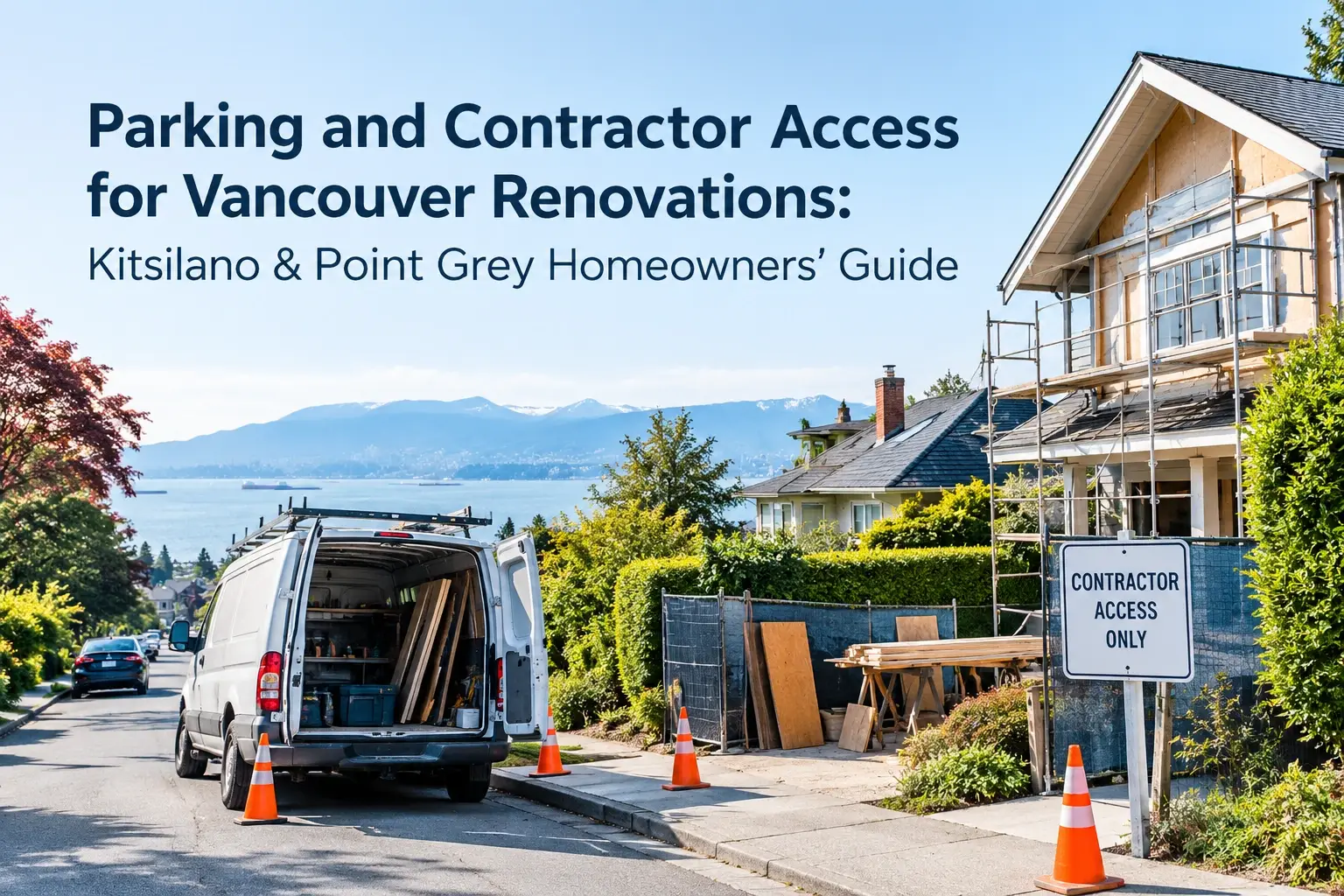
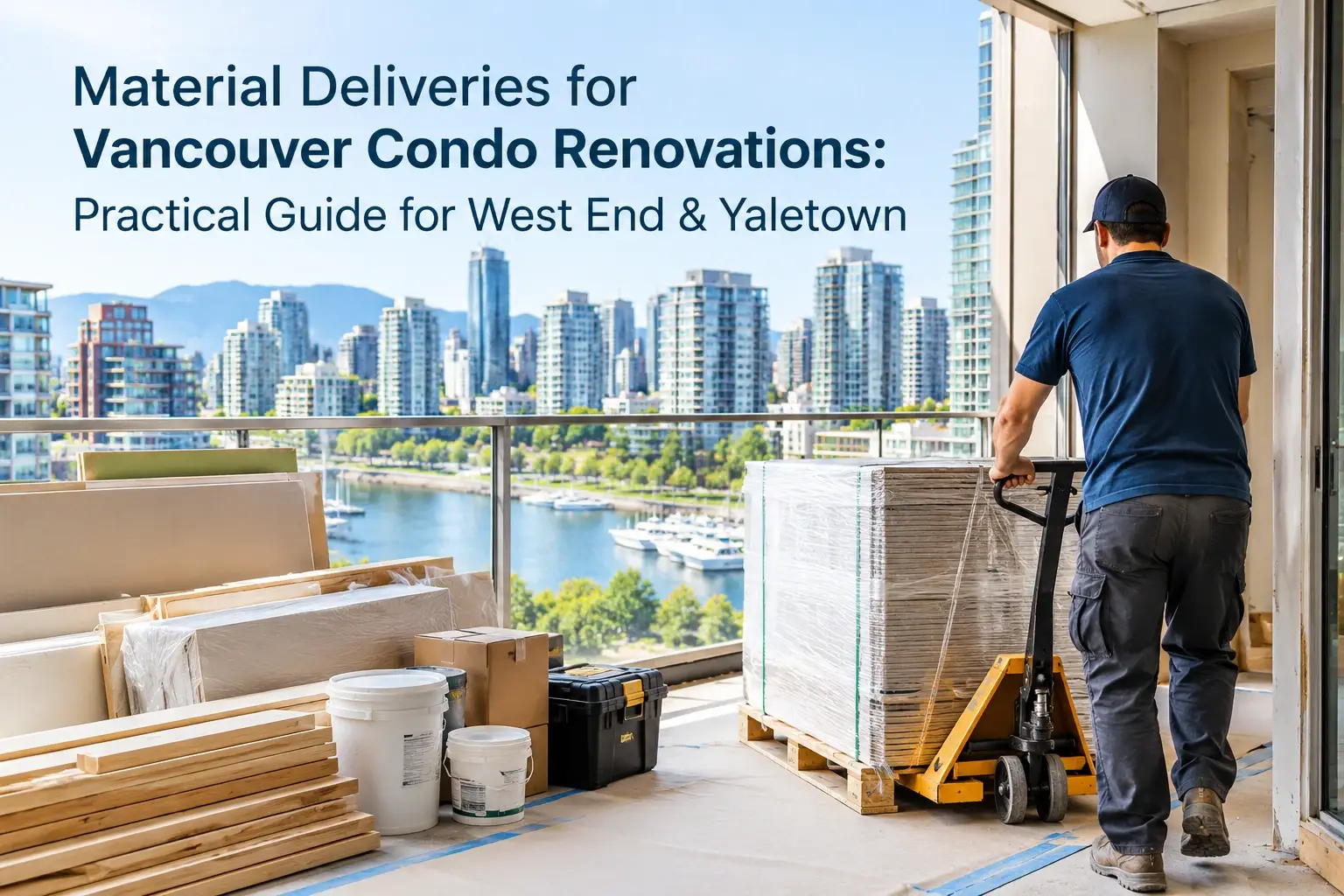
Yaletown and West End buildings present logistical challenges that simply don’t exist in suburban house renovations. Most buildings have only one or two service elevators, so material deliveries and debris removal require advance bookings. Many condos limit elevator bookings to a few slots per unit each week, complicating material transport.
Every sheet of drywall, every box of tile, and every bin of demolition waste must travel through corridors and elevators with protective padding installed and removed each time. Streets like Pacific Boulevard and Davie Street offer limited parking and tight loading zones, which slows delivery trucks and adds buffer time to every material drop.
These logistics mean that tasks which take a few hours in a house – like receiving a tile delivery or hauling out old fixtures – can consume an entire morning in a downtown tower. Multiply that across weeks of construction, and the calendar impact is substantial.
Now that the structural reasons are clear, let’s look at each timeline driver in detail.
Key Timeline Drivers in Vancouver Condo Bathroom Renovations
The following factors are the specific reasons your condo bathroom renovation in Yaletown or the West End takes longer than the same project in a detached house. Each one adds days or weeks to the overall schedule.
Strata Approval and Alteration Agreements
Strata approval is mandatory for almost all condo renovations that go beyond paint and hardware swaps. A signed alteration agreement is often required before commencing renovations in a strata, and getting that agreement in place is one of the longest single phases of a condo bathroom renovation.
Most Yaletown and West End stratas require you to submit a detailed renovation application package. Typical requirements include:
Detailed project scope and floor plans showing proposed plumbing or electrical changes
Contractor credentials, WorkSafeBC clearance letters, and insurance certificates (contractors must carry at least $2 million liability insurance)
A construction schedule with start and end dates
A noise control plan that aligns with strata bylaws
Waterproofing product specifications and manufacturer datasheets
A damage deposit, typically ranging from $1,500 to $3,000
For cosmetic-only work – tile replacement, new fixtures in the existing layout – strata approval may take 1–3 weeks. For a full bathroom renovation involving plumbing changes, electrical work, or waterproofing modifications, expect four to eight weeks. If your application is incomplete or the council requests additional details about waterproofing or soundproofing, you may face another full meeting cycle.
Experienced contractors understand strata approval processes and can prepare application packages that pass on the first submission, saving you weeks of back-and-forth.
Restricted Work Hours and Noise Rules
Strata bylaws often restrict renovation work to specific weekdays and hours. Many condos restrict construction hours to weekdays from 8 AM to 5 PM, with no noisy work on evenings or weekends. Some buildings impose even tighter windows, such as 9 AM to 4:30 PM for heavy demolition or core drilling. Contractors must schedule work around strata noise restrictions, which directly limits daily productivity.
In a detached house, a contractor might work 10-hour days or add Saturday shifts to compress the schedule. In a condo building, those options are off the table. Limited working hours can extend project timelines significantly – the same number of labour hours gets spread across more calendar days. A renovation phase that takes three weeks in a house may take four to five weeks in a condo purely because of shorter available work windows.
Elevator Bookings and Building Access
Large items – bathtubs, vanity cabinets, tile pallets, demolition bins – cannot be carried through lobbies and stairwells. They require the service elevator, and most buildings have formal elevator booking procedures with limited availability.
If your building allows only two or three elevator slots per week for your unit, and another owner is also mid-renovation or moving, you may find yourself waiting days between deliveries. Material deliveries that would take a single morning in a house can require scheduling a week in advance in a downtown tower. Corridor and elevator protection (padding, corner guards) must be installed and removed for each move, adding setup time.
These logistics create gaps in the construction schedule where trades are ready to work but materials haven’t arrived yet, or debris hasn’t been removed to make room for the next phase.
Shared Plumbing, Ventilation, and Fire Separations
Renovations in Vancouver condos frequently face logistical issues related to shared building infrastructure. In concrete towers, condos share plumbing lines through vertical risers cast into the structure. If your renovation project involves plumbing relocation – moving a shower drain or relocating a toilet – you may need to access common property, which triggers additional strata review and potentially an engineering assessment.
Water shut-downs for the entire stack must be coordinated with building management and often limited to short windows (typically a few morning hours). Your plumber may need to wait days or weeks for the next available shut-down slot, stalling rough-in work.
Fire-stopping around any new penetrations through concrete floors or walls requires specific materials and inspection. If the fire-stopping fails inspection, rework and re-inspection add more waiting time. These requirements don’t apply to most house renovations, where plumbing lines and structure are self-contained.
More Inspections and Trade Sequencing
Major renovations require plumbing, electrical, and building permits from the City of Vancouver, and each permit triggers mandatory inspections. Electrical work requires permits from Technical Safety BC. Permit processing time usually runs 2 to 4 weeks, and the city permit approval process can add weeks to the pre-construction timeline.
Complications arise when multiple trades must coordinate their work during renovations. The sequence is rigid: demolition must finish before rough-in plumbing and electrical, which must be inspected before waterproofing can be applied, which must cure and pass inspection before tile installation begins. Each inspection is a hard stop – if the plumber’s work isn’t signed off, the waterproofing crew can’t start, and the tile setter stays home.
In a house, these inspections happen too, but scheduling is simpler and there’s more flexibility to overlap tasks. In a condo, strata rules and building access constraints make trade sequencing tighter and less forgiving.
Existing-Condition Surprises in Older Towers
Many West End towers were built in the 1970s and 1980s, and early Yaletown developments date to the 1990s. These buildings often contain aging infrastructure behind their bathroom walls: cast-iron drain pipes, deteriorated waterproof membranes (or none at all), non-compliant electrical wiring, and corroded copper supply lines—issues that also show up in older homes needing a bathroom remodel in North Vancouver.
Delays can occur due to hidden issues discovered during demolition, such as water damage or deteriorated plumbing that require a more invasive bathroom renovation from the inside out. Older Vancouver condos often require hazardous material assessments before renovations. When demolition reveals these conditions, work pauses immediately. The contractor must assess the problem, consult with the strata or building engineer, source appropriate materials, and sometimes coordinate repairs that affect common property or adjacent units.
In a house, you’d address the same issue with your contractor and keep moving. In a condo, the approval chain for unexpected repairs is longer, and the fixes may require coordination with the strata corporation, making these surprises significantly more disruptive to your schedule.
From Idea to Completion: How a Vancouver Condo Bathroom Timeline Actually Unfolds
With those drivers in mind, here’s how a typical Yaletown or West End condo bathroom renovation actually progresses from first idea to final sign-off. These durations are 2026 ballparks for a full gut bathroom with minor plumbing changes – not guarantees, but realistic expectations based on local industry data.
Typical Phase-by-Phase Timeline
Initial consultation, scope definition, and strata bylaw review – 1–2 weeks. Pull your strata documents, review definitions of common property, and understand what your building allows. House equivalent: 1 week.
Design, product selection, and layout finalization – 1–2 weeks. Choose tile, fixtures, vanity (or custom cabinetry), shower glass, lighting. Finalize whether you’re changing the existing layout or keeping plumbing in place. House equivalent: 1–2 weeks.
Strata alteration agreement preparation and submission – 1–2 weeks to assemble; 2–4 weeks for council review and approval. This is the phase most condo owners underestimate. Permits for bathroom renovations cost between $300 and $1,500, and strata deposits add $1,500 to $3,000, so they should be included early in your condo bathroom renovation cost planning. House equivalent: N/A.
City permit applications – Submit in parallel with strata approval when possible. Permit processing time usually runs 2 to 4 weeks. Moving plumbing fixtures adds $5,000 to $12,000 and requires permits, which can materially affect your overall bathroom renovation cost in Vancouver. Skipping the permit process can lead to fines up to $20,000. House equivalent: 1–2 weeks.
Pre-construction logistics – 1 week. Book elevator slots, loading bay, corridor protection, debris removal. Order long-lead materials if not already done. House equivalent: minimal.
On-site construction – 4–6+ weeks (detailed below). House equivalent: 3–5 weeks.
Final inspections and strata sign-off – 3–7 days. Documentation, photos, warranty paperwork, and permit close-out may be required by strata. House equivalent: 1–2 days.
Total condo timeline: approximately 12–16 weeks. Total house timeline for equivalent scope: approximately 6–8 weeks.
On-Site Construction: Condo vs House Comparison
The construction phase itself often runs three to five weeks in a house versus 4–6+ weeks in a condo for the same project scope. Labor costs account for 40–50% of renovation budgets in Vancouver, and those labour hours are spread across more calendar days in a condo due to restricted work windows.
A typical on-site condo sequence looks like this, and working with an experienced bathroom renovation Vancouver specialist can help keep each phase tightly coordinated:
Site protection and demolition: 3–5 days
Rough-in plumbing and electrical work (plus water shut-down coordination): 1–2 weeks
Waterproofing application, curing, and inspection: 3–5 days
Tile installation on floors and walls: 4–7 days depending on complexity
Fixture installation (toilet, vanity, shower glass, lighting): 2–3 days
Paint, trim, sealing, final cleaning: 1–2 days
In a house, a crew might compress demolition and rough-in into the same week by working longer days. In a condo, elevator availability, noise restrictions, and mandatory inspection pauses stretch these phases out. Working with a contractor who regularly handles bathroom remodels in Vancouver can help you anticipate these constraints. Material lead times can significantly impact the timeline of condo renovations – if custom shower glass ordered eight weeks ago arrives late, the entire finishing sequence shifts.
Case-Style Examples: Yaletown & West End
Example A: Yaletown glass-shower upgrade in a 2006 tower A condo owner planned a straightforward renovation: remove the tub, install a frameless glass walk-in shower, retile the bathroom, and add a new vanity. No plumbing relocation was needed. The strata approval process took three weeks, and no plumbing permit was required. On-site work ran four weeks. However, custom shower glass had a six-week lead time – because it was ordered after strata approval rather than during, the project sat idle for two weeks waiting on glass.
Total: approximately 9 weeks from application to completion.
Example B: West End full gut in a 1983 concrete high-rise A full renovation involving plumbing relocation (moving the shower to the opposite wall), new electrical for heated floors, and a complete retile of a 65-square-foot master bathroom. For budgeting, this scope typically puts condo bathroom renovation cost well above a mid-range job when owners choose premium finishes, and luxury renovations can climb further. Strata approval took six weeks due to a request for additional engineering documentation on the drain relocation. Permits added three weeks. During demolition, the crew discovered corroded cast-iron drains in the wall that required coordination with the strata corporation for repair. On-site construction ran seven weeks.
Total: approximately 16 weeks.
The pattern is clear: construction timelines for renovations in Vancouver condos can extend from weeks to several months, depending on logistics and approvals. Timelines slip not because trades are slow, but because building processes add layers that don’t exist in house renovations.
Planning Your Condo Bathroom Renovation to Minimize Delays
You can’t eliminate every constraint that comes with renovating in a condo building, but you can often save several weeks by planning strategically. The following steps focus on actions within your control.
Map Out Approvals Early
As soon as you start thinking about a condo bathroom renovation, obtain your building’s strata bylaws, renovation handbook, and any standard alteration agreement forms. Read them carefully. Create a checklist of everything the strata wants: drawings, scope description, noise hours, insurance certificates, damage deposits, and elevator booking rules.
Submitting a complete package once – approximately 4–6 weeks before your target demolition date – almost always beats sending partial information across multiple rounds. Every incomplete submission risks rolling your application to the next monthly strata council meeting.
Lock the Design and Scope Before Applying
Late design changes are one of the most controllable sources of delay. If you decide to move the shower after strata has already approved your original layout, you’ll likely need to re-submit and wait for another review cycle. That can add a full month.
Finalize your layout, fixture selections (faucets, toilet, shower system, vanity or double vanity), tile coverage, and any plumbing or electrical changes before sending anything to strata or the city. A locked project scope also helps your contractor provide a more accurate quote and realistic renovation timelines, and it reduces mid-project change orders that disrupt trade sequencing.
Order Long-Lead Materials Up Front
Common long-lead items for metro Vancouver condo bathrooms include, especially when planning more customized shower remodels in North Vancouver or broader shower renovation projects:
Custom frameless shower glass enclosures (4–10 weeks)
Specialty or imported tile (4–8 weeks)
Custom cabinetry and vanities (6–12 weeks)
Thermostatic shower valve sets and premium fixtures (4–6 weeks)
Quartz countertops for vanities (3–6 weeks)
Order these as soon as your design is frozen – ideally while the strata approval process is underway. This way, materials arrive when you’re ready for the construction phase rather than forcing trades to wait. Homeowners in nearby markets with similar urban constraints, such as those planning a bathroom renovation in Seattle, benefit from the same early-order strategy. Verify delivery logistics with your building’s management: confirm loading bay access, elevator availability for large items, and any on-site storage options.
Coordinate Around Building Schedules
Ask your property manager about blackout periods when the building restricts or prohibits renovations – common during summer move-in/move-out peaks, lobby renovations, or annual mechanical maintenance. Timing your renovation project for shoulder seasons (late winter or early fall) often means less competition for elevators and better trade availability.
Reserve elevator and loading bay slots as soon as your strata approval looks likely, even before your exact start date is confirmed. In buildings with heavy renovation activity, waiting to book can push your material deliveries back by weeks.
Common Condo-Specific Challenges and How to Handle Them
These are the recurring issues that quietly extend Vancouver condo bathroom timelines. Each one is avoidable or manageable with preparation.
Slow or Conditional Strata Approvals
Problem: The strata council approves your renovation “in principle” but requests additional waterproofing specifications, soundproofing details, or contractor documentation before granting final written strata approval.
Solution: Submit manufacturer datasheets for your waterproofing membrane, detailed drawings showing all plumbing or electrical changes that affect common property, and your contractor’s full credentials up front. Proactively ask the property manager what additional information would give the council confidence. Hiring an experienced contractor who regularly works in Vancouver condos means they already know what strata councils expect to see.
Limited Water Shut-Down Windows
Problem: Your building allows domestic water shut-offs only on certain weekday mornings, and your plumber needs two separate shut-downs for rough-in and final fixture connections. Each delay pushes plumbing work back by days.
Solution: Have your plumber meet with building staff early – before the construction phase begins – to map out required shut-downs and pre-book multiple windows on the building calendar. Planning these into the schedule from day one prevents the cascading delays that occur when a plumber shows up ready to work but can’t turn off the water.
Inspection Bottlenecks
Problem: Work stops for days while waiting for city or third-party inspections. A failed inspection means rebooking and potentially losing another week.
Solution: Build inspection milestones into your construction schedule from the start, and ensure trades complete their work to code before the inspector arrives. A plumbing permit inspection that fails because of a missing fitting doesn’t just cost a repair – it costs the scheduling gap until the next available appointment. Experienced contractors anticipate these checkpoints and prepare accordingly.
Neighbour Complaints and Noise Disputes
Problem: Noise complaints from adjacent units prompt the strata to issue a warning or temporarily suspend your renovation project.
Solution: Proactive communication prevents most disputes. Post your construction schedule in the elevator and hallway. Give immediate neighbours written notice with your contractor’s contact information. Enforce strict job-site cleanliness in corridors and elevators. And stick precisely to allowed work hours – even running five minutes over can trigger formal complaints in noise-sensitive buildings.
Conclusion and Practical Next Steps
Bathroom renovations in Vancouver condos take longer than house renovations not because the work itself is more complex, but because of the layers of approvals, logistics, and shared-system coordination that surround the work. In Yaletown and the West End, where most buildings are high-rise concrete towers with strict strata rules and limited access, these layers can add 6–10 weeks to what would otherwise be a straightforward renovation project.
Condo bathroom renovations in Vancouver cost $20,000 to $45,000 depending on scope and finishes, and Vancouver bathroom renovation costs in this range can rise further for luxury renovations, with a mid-range renovation falling in the $25,000–$35,000 range. Basic bathroom remodels in Vancouver start at around CAD $20,000. Your condo bathroom renovation cost should also account for strata deposits, permit fees, and potential unexpected expenses from hidden conditions in older towers.
Here are your concrete next steps:
Download and read your strata bylaws and renovation package. Know your building’s specific requirements before you spend time on design.
Clarify your desired bathroom scope and non-negotiables. Decide now whether you want to keep the existing layout or pursue plumbing relocation – this single decision affects both your condo renovation cost and timeline.
Shortlist contractors with downtown Vancouver condo experience. Many contractors are booked 4–8 weeks ahead for strata work, so start conversations early.
Build a realistic timeline that includes 6–10 weeks for pre-construction. Don’t assume work begins the week after you sign a contract.
Order long-lead materials as soon as your design is locked – custom glass, specialty tile, and custom cabinetry should be in transit while your strata application is under review.
Reserve elevator and loading bay slots as early as your building allows.
If you’re also considering a condo kitchen renovation, condo flooring, or a broader full condo renovation alongside your bathroom, many of these same principles – strata approval, elevator booking, trade sequencing – apply, with additional strata acoustic coordination often required, so the project timelines and coordination demands increase substantially. Homeowners planning work in neighbouring municipalities may face similar logistics with their bathroom remodelling projects in Burnaby or more comprehensive bathroom renovations in Burnaby.