Introduction
Condo bathroom waterproofing is a non-negotiable step when renovating any multi-unit building in Vancouver. In towers across False Creek and Olympic Village, shared plumbing makes unsealed showers a severe leak risk. Consequently, water can quickly penetrate neighboring suites, common corridors, and core structural elements. The primary goal is straightforward: prevent leaks, mold, and costly water damage before they start.
This article outlines planning, critical zones, practical steps, and condo-specific renovation challenges in Vancouver. However, it does not teach technical step-by-step membrane installation. Instead, it helps local condo owners and investors protect their properties and neighbors. Furthermore, reading this guide helps you evaluate project needs before requesting contractor quotes.
Here is the core takeaway: tile and grout alone are not waterproof. A proper condo bathroom waterproofing system uses continuous, bonded membrane systems beneath tiled surfaces, sealed transitions at every corner and penetration, and correctly prepared substrates with appropriate slopes toward drains. Without these elements, water will find its way into concrete slabs, stud cavities, and the units around you.
By the end of this article, you will understand:
The essential areas in a condo bathroom that require waterproofing and why each one matters
How to spot early signs of waterproofing failure before damage spreads
How strata bylaws, building requirements, and multi-unit consequences affect your renovation
What a practical, professional waterproofing process looks like from start to finish
When to bring in experienced renovation professionals like 4 Local Homes to plan and manage the work
Understanding Condo Bathroom Waterproofing in Vancouver
Bathroom waterproofing is a hidden system installed beneath tile and finishes. It creates an impermeable layer that stops everyday water splashes, steam, and drips. This system prevents moisture from reaching the building structure or neighboring units. It also determines whether your Vancouver condo renovation lasts or fails.
Moisture control is critical because Vancouver receives over 1,100 mm of annual rain. As a result, coastal humidity remains high for most of the year, especially from fall through spring. Furthermore, in concrete towers like those in False Creek, waterproofing weaknesses easily trap moisture. These hidden moisture accumulation causes mold growth and structural degradation behind clean surfaces. That makes waterproofing a condo bathroom in Vancouver not just a construction detail but a matter of multi-unit risk management.
What “Waterproofing” Really Means in a Condo Bathroom
There is an important distinction between “water-resistant” and “waterproof.” Tile, grout, and caulk are water-resistant finish materials-they shed water on the surface and slow moisture penetration. But they are not waterproof barriers. Water can pass through micro-cracks in grout, around fixture penetrations, and through hairline fractures in tile, eventually reaching the substrate behind.
A complete waterproofing system combines a sheet or liquid membrane, compatible backer boards, sloped surfaces, and sealed penetrations. In most Vancouver concrete condos, this coordinated combination effectively protects the building structure. Furthermore, applying waterproofing continuously behind all tiled areas prevents water from traveling into vulnerable zones.
The relationship between waterproofing and mold prevention is direct. Mold and mildew thrive in damp environments, including inside walls and under floors where moisture accumulates invisibly. A well-executed waterproofing system contains everyday moisture within the shower or tub enclosure and prevents it from soaking into cavities where it can support hidden mold colonies.
Key Components of a Condo Bathroom Waterproofing System
A successful system relies on several parts working together-not just one product applied in isolation. Using a complete and compatible waterproofing system is vital for effective moisture management. The main components include:
Bathroom waterproofing membrane: Either a sheet membrane (such as Schluter-Kerdi, a polyethylene barrier embedded with fleece) or a liquid-applied membrane (such as RedGard or HydroBan) that cures to form a seamless waterproof layer. Sheet membranes typically cost $8–$15 per square foot installed in Metro Vancouver for a full shower enclosure; liquid membranes may run $5–$10 per square foot in simpler areas.
Tile backer board: Cement board or fiber cement substrate behind tile and membrane, providing structural strength and moisture resilience. Regular drywall or standard gypsum board is not suitable in wet zones. Proper structural backing is crucial for substrate preparation before waterproofing.
Primers and sealants: Applied to substrates before membrane installation and at joints, transitions, and penetrations to ensure adhesion and continuity.
Drain assemblies: Point drains or linear drains with bonding flanges designed to integrate with the membrane so water cannot bypass the drain body.
Compatible thinset and grout: Modified, moisture-stable mortars and grouts that work with the membrane system without compromising its integrity.
Critical areas such as corners and transitions require special attention during waterproofing. Wall-to-floor joints, inside and outside corners, shower niches, curb tops, and plumbing penetrations for faucets and shower heads are where most failures occur. Product compatibility and adherence to manufacturer instructions are essential for long-term performance in high-use condo showers.
With these components understood, the next question is where exactly waterproofing must be applied in a typical Vancouver condo bathroom.
Critical Waterproofing Areas in Vancouver Condo Bathrooms
Now that you know what a waterproofing system consists of, the practical question is where it needs to go. Missing any of these zones can allow leaks to travel under tile, into concrete slabs, or along shared walls into other suites. Every point where pipes penetrate a membrane must be sealed to prevent leaks, and every transition between surfaces must be treated as a potential failure point.
Showers: Walls, Floors, and Curbs
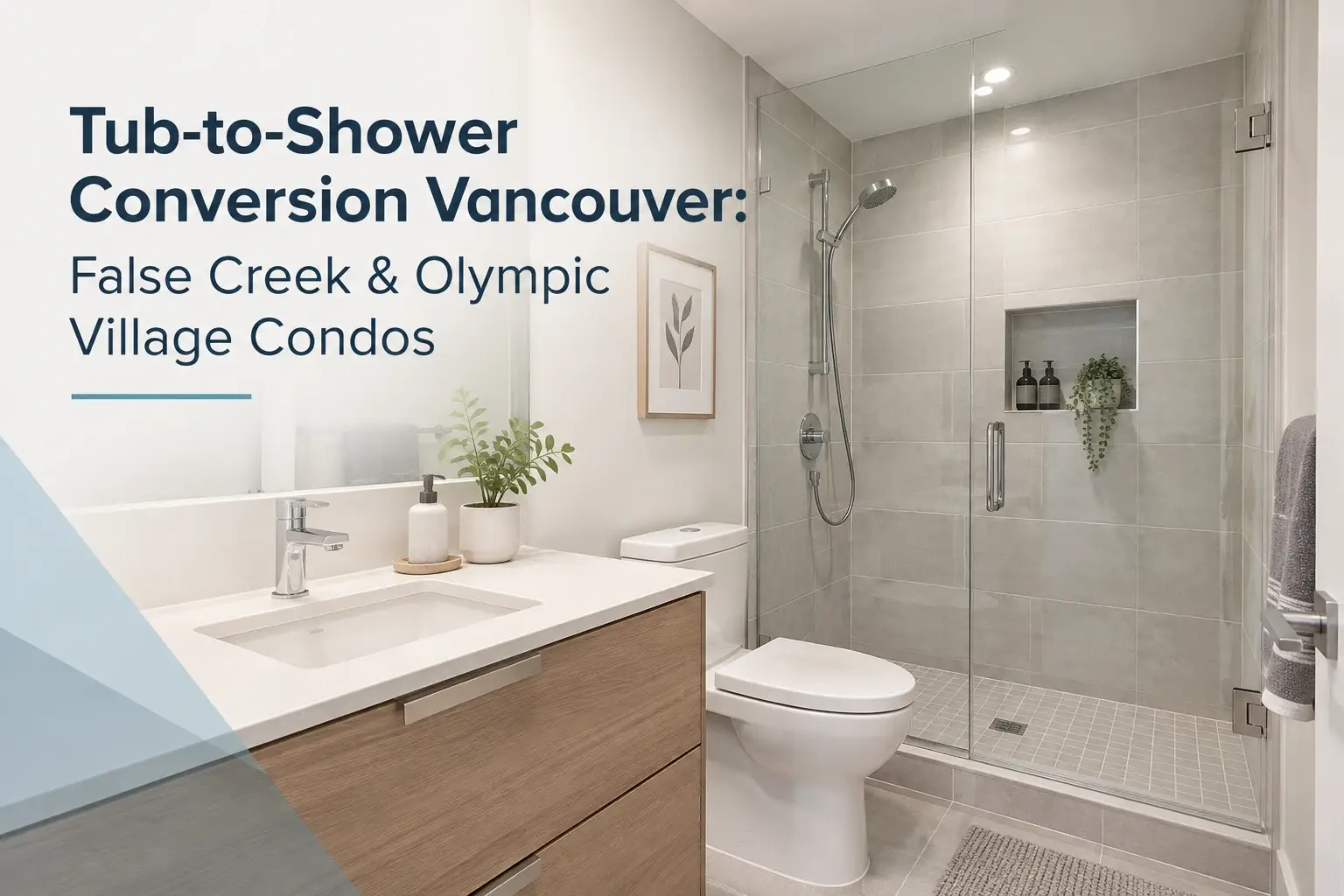
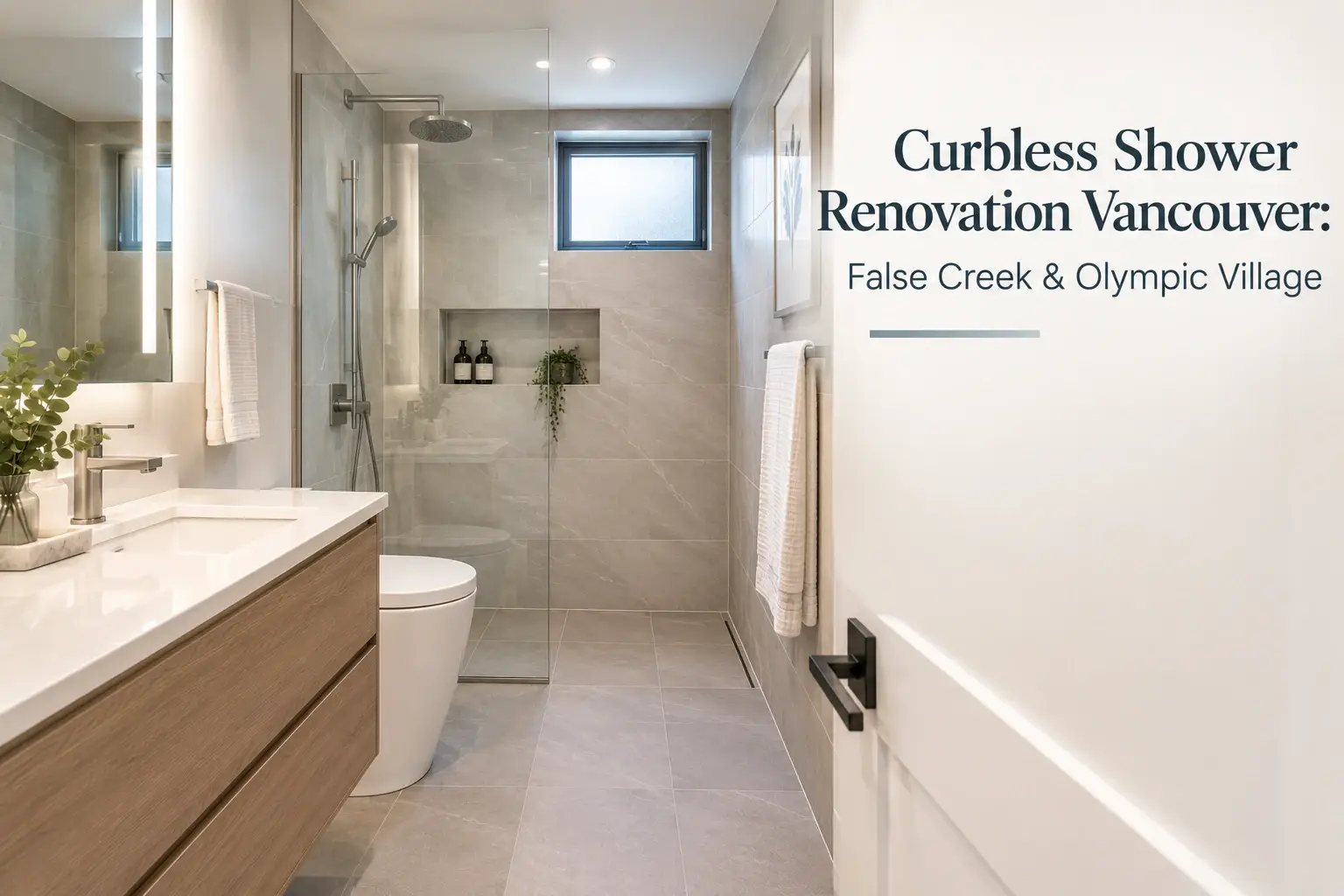
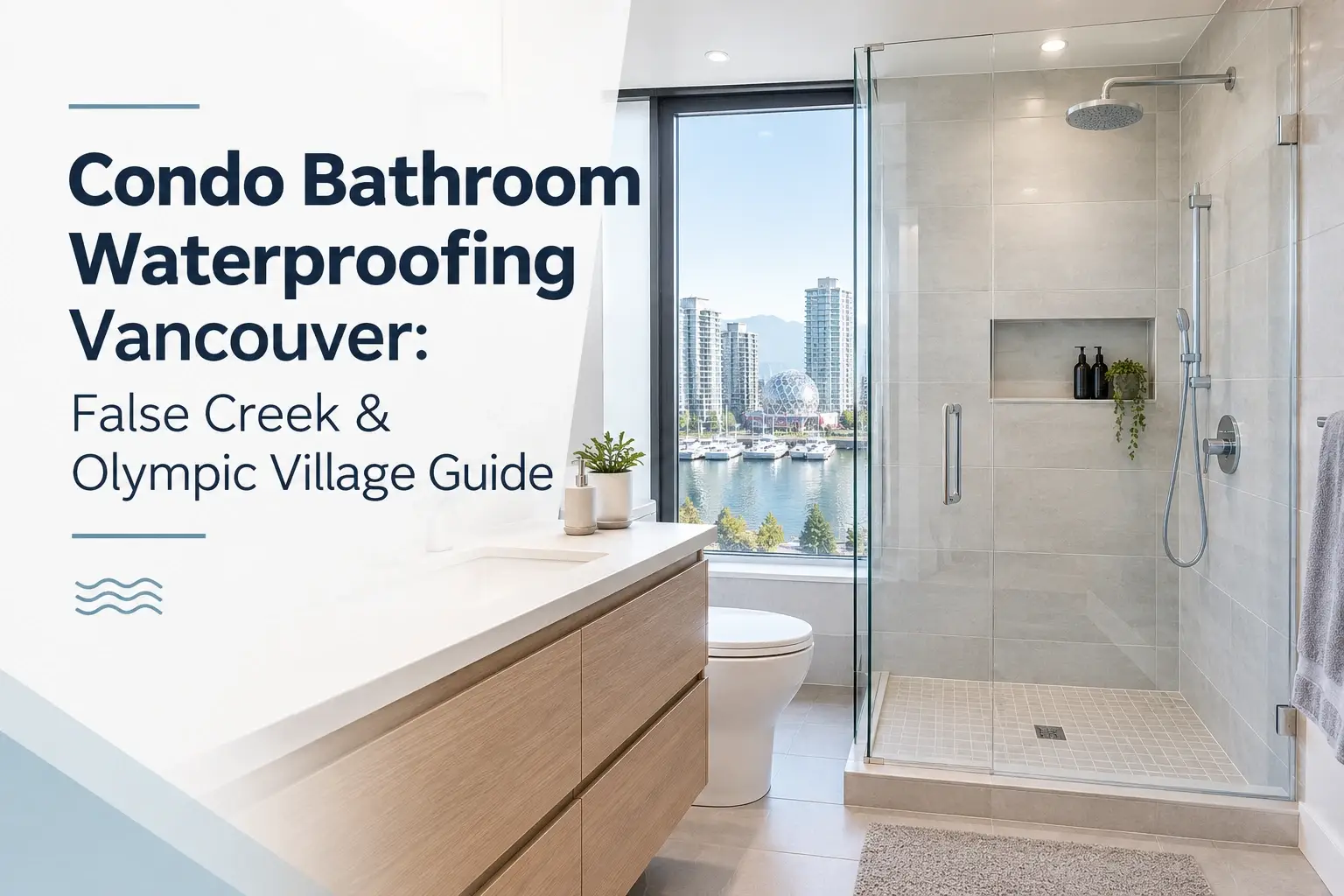
Modern False Creek and Olympic Village condos commonly feature tiled walk-in showers with linear drains and frameless glass enclosures. Some units have zero-threshold (curbless) designs, while others use conventional shower curbs. Each configuration has specific waterproofing requirements.
Shower walls need continuous membranes from at least showerhead height down to the pan. In many newer or high-steam bathroom designs, contractors waterproof to the full ceiling height. Coverage must include corners and any built-in niches-these recessed areas are common leak points because they introduce additional edges and joints.
Shower floors must be fully waterproofed under the tile, with a suitable floor slope maintained to ensure proper drainage toward the drain assembly. The connection between the membrane and the drain flange must be watertight. Curbs or shower entries need membrane coverage on all surfaces, including the top and the outside face.
Glass enclosures alone do not stop moisture migration. They manage bulk water splash, but the waterproofing system must already protect everything under and behind the tile before glass is even considered.
Bathtub Surrounds and Alcoves
Common condo tub layouts include tiled alcove tubs, drop-in tubs with tile decks, and tub-shower combos along shared walls. In each case, the tub-to-wall joint, the corners at each end of the tub, and any horizontal surfaces where water can sit-window sills, ledges, tub deck edges-are priority areas.
According to the BC Building Code, waterproof finish heights vary by configuration: 1.8 m in showers, 1.2 m above the rim for tub-shower combos, and 400 mm above the rim for tubs without showers. Membrane coverage should extend beyond the immediate splash zone to account for overspray, children’s baths, and cleaning.
Relying only on caulk between the tub and tile is a common mistake. Caulk is a finish sealant-it is not the primary waterproofing line of defense. If the membrane behind the tile is absent or incomplete, caulk failure allows water directly into the wall cavity.
Bathroom Floors, Corners, and Transitions
In condos, water from a shower, tub, or sink can reach the main bathroom floor and then seep into the slab or subfloor. Waterproofing the entire bathroom floor is recommended in many condo projects, especially in smaller units where the whole floor can get wet during normal use. The membrane should turn up the walls several inches to prevent water from migrating behind baseboards.
Floor-to-wall joints, the area around toilet bases, floor drains (if present), and the doorway threshold where tile meets hallway flooring all need careful attention. Properly detailing these transitions can reduce the chance of leaks into hallways, neighboring units, or common areas. Exterior drainage solutions prevent water intrusion at the building envelope level, but interior bathroom waterproofing handles the wet-zone side of the equation.
Drains and Plumbing Penetrations
Leaks most often appear around drains, mixing valves, shower heads, and supply lines-not at visible tile surfaces. Every point where pipes penetrate a membrane must be sealed to prevent leaks: this includes body sprays, handheld shower connections, faucet stems, and the supply lines behind niches.
The connection between the membrane and the drain assembly is one of the most critical details in a condo shower waterproofing project. Whether you use a point drain with a bonding ring or a linear drain with an integrated flange, the membrane must be mechanically or adhesively joined to the drain body so water cannot bypass it.
Key points to remember:
Every hole, pipe, and valve penetration through the membrane is a potential leak path
Drain flanges must be compatible with the chosen membrane system
Niches and recesses introduce additional edges that need sealing with preformed corners or compatible tape
With these areas mapped out, the next step is understanding how Vancouver’s condo-specific realities-strata rules, building construction, and multi-unit consequences-shape the waterproofing process.
Vancouver Condo Realities: False Creek & Olympic Village Challenges
False Creek and Olympic Village are defined by high-rise concrete towers, glass-and-concrete mid-rises, and dense, stacked plumbing systems serving dozens of units per riser. In these buildings, even a modest shower leak can affect neighbors below, common corridors, or structural elements that serve the entire building. Understanding these realities is essential for anyone planning a Vancouver condo bathroom renovation.
Concrete Buildings, Shared Walls, and Stacked Plumbing
Typical neighborhood units feature concrete slabs, demising walls, and stacked vertical plumbing risers. However, water from a failed membrane can easily travel through concrete along conduits or rebar. As a result, leaks often show up as damp stains in units far from the original source.
Many buildings in False Creek and Olympic Village were built between roughly 2008 and 2020. Bathrooms in these towers are often compact, with little tolerance for water pooling or misaligned slopes. Repairs in a shared building frequently require coordination with strata, neighbors, and building management-adding time and complexity that single-family home renovations do not face.
Vancouver’s leaky condo crisis of the 1985–1999 era taught the construction industry hard lessons about insufficient waterproofing. While newer buildings have improved significantly, renovations in older units from that era often require more comprehensive waterproofing. Buildings from that period may have degraded and moisture trapped in cavities complicate any bathroom renovation.
Strata Bylaws, Building Rules, and Access Limitations
Most Vancouver strata corporations enforce renovation bylaws regarding bathroom updates, including waterproofing and noise restrictions. Consequently, strata approval is typically required before starting any work. Furthermore, some stratas strictly specify acceptable membrane types, coverage heights, or underlayment products.
BC Building Code and strata bylaws dictate specific requirements for bathroom renovations. If the toilet, shower, or bathtub footprint is changed, or plumbing is moved, a permit is typically required from the City of Vancouver. Even for like-for-like renovations, building officials may inspect or require that selected materials comply with current code.
Practical limits also shape condo projects: elevator size restricts material deliveries, parking availability affects trades access, waste removal must follow building rules, and working hours are usually limited. These constraints influence the timeline and methods a contractor can use-something experienced home remodel contractors in Vancouver in the lower mainland account for during planning.
Consequences of Leaks in Multi-Unit Properties
Poor waterproofing leads to real-world outcomes: damage to ceilings below, swollen baseboards, delaminated flooring, and stained drywall in neighboring units. In a strata property, water leak liabilities can fall on the unit owner for damages, and the costs can escalate quickly-insurance deductibles, special levies, disputes over responsibility, and disruption while repairs occur across multiple suites.
Some insurance providers scrutinize non-permitted or non-compliant bathroom renovations when assessing water damage claims. A renovation that skipped proper waterproofing or ignored strata requirements can leave an owner exposed to both repair costs and coverage disputes.
The Pacific Point high-rise in the False Creek area provides a sobering example: built in the early 1990s, the building later required major envelope rehabilitation triggered by leaks, spalling, and water damage, with costs reportedly reaching $50,000–$100,000+ per unit. While that project involved the full building envelope, it highlights how deferred or inadequate moisture protection in any part of a building-including bathrooms-can escalate into enormous multi-unit expenses.
Investing in quality condo bathroom waterproofing in Vancouver as part of a well-planned house renovation in Vancouver helps avoid far larger multi-unit repairs later. It is a priority that protects not just your unit but your neighbors’ homes and the building’s long-term value.
How to Spot Possible Waterproofing Problems in Your Condo Bathroom
Many waterproofing issues stay hidden for months or years, but certain surface clues can warn owners to investigate further. These signs are not definitive proof of failure-they can have other causes-but they are good reasons to call in a qualified renovation or building professional before damage spreads.
Visible Surface Symptoms
Watch for these indicators in your bathroom:
Cracked or crumbling grout lines, especially in shower corners and where walls meet floors
Loose or hollow-sounding tiles, particularly on shower floors-tap tiles gently and listen for a hollow sound that suggests debonding
Recurring caulk failures: gaps, cracks, separation, or peeling at tub-to-wall joints, curbs, or around shower glass
Discoloration or efflorescence (white mineral deposits) on grout, which indicates moisture migrating through from behind
Peeling paint, bubbling drywall, or swollen door casings near the bathroom, in adjacent bedrooms, or in the hallway
Moisture, Odors, and Stains
Persistent dampness on bathroom floors long after use, fogged mirrors or glass that does not clear, or a musty smell can all indicate hidden moisture accumulation. Mold and mildew thrive in damp environments-basements, wall cavities, and under flooring-and a persistent odor is often the first sign.
Unexplained water stains on the ceiling or on common hallway ceilings near your bathroom wall should be taken seriously. Dehumidifiers help reduce moisture in homes, but if dampness persists despite normal ventilation, the issue may be behind the walls rather than in the air.
Exhaust fans should effectively remove moisture to prevent condensation and mold growth. Mechanical ventilation problems-weak fans, blocked ducting, or fans that go unused-increase condensation and make it harder to distinguish between normal steam and actual leaks.
When to Call a Professional
Practical thresholds for seeking professional help include:
Repeated grout cracking in the same areas after repair
Tiles detaching from walls or floors
Any report of water appearing in the unit below your bathroom
Visible mold growth on grout, caulk, or wall surfaces
Persistent musty odors that cleaning does not resolve
Document issues with photos and dates, then notify the strata council or property manager if multiple units may be affected. Documentation of waterproofing processes is important to protect against future issues-both for insurance purposes and for any liability discussions with strata.
Contacting bathroom renovation professionals experienced with condo bathroom waterproofing in Vancouver to perform non-destructive moisture checks is a practical next step. Moisture meters and thermal imaging can reveal hidden dampness without tearing out tile.
Practical Condo Bathroom Waterproofing Process
A successful False Creek or Olympic Village condo bathroom renovation follows a clear sequence from planning through final tile. Workmanship, preparation, and compliance with building requirements matter more than luxury fixtures alone. Here is how a professional team generally approaches the work.
Step-by-Step Waterproofing and Renovation Workflow
Assessment and Planning – Inspect existing finishes, test for moisture, and observe substrate condition. Review strata bylaws, building envelope reports, and insurance requirements. Determine the scope: full bathroom waterproofing, shower-only, or targeted repairs. Set renovation goals and budget.
Protection and Demolition – Protect common areas, hallways, and adjacent unit finishes. Remove old tile, backer board, and damaged materials down to a sound substrate. Existing waterproofing layers are removed if they have failed.
Substrate Repair and Preparation – Repair cracks in concrete slabs, level uneven surfaces, and install appropriate backer boards. Frame shower niches or benches. Ensure proper slope to drains per code requirements. Proper structural backing is crucial for substrate preparation before waterproofing.
Install Bathroom Waterproofing Membrane – Apply sheet or liquid membrane to shower walls, floors, tub surrounds, and bathroom floors as specified. Pay special attention to corners, seams, and overlaps. Continuous, bonded membrane systems are essential for waterproofing in condos-gaps or unbonded areas become leak paths.
Seal Penetrations and Transitions – Treat drain connections, plumbing penetrations, inside and outside corners, curbs, and door thresholds with compatible sealants and reinforcing accessories such as preformed corners, pipe collars, and gaskets.
Inspection and Testing – Visually inspect membrane coverage and detailing. Flood testing is a mandatory step before laying tile in a waterproofed area-filling the shower pan with water and monitoring for any loss confirms watertightness. Some strata corporations or code authorities may require inspection sign-offs at this stage.
Tile and Finish Installation – Install tile with compatible mortars, maintain proper expansion joints, grout all field joints, and finish with caulk (not rigid grout) in movement joints. Large-format tiles, linear drains, and curbless designs must all be coordinated with the waterproofing plan and slopes.
Final Review and Maintenance Guidance – Confirm slopes, check fixture connections, verify that ventilation is functioning, and provide care instructions for maintaining grout, caulk, and seals over time. Maintenance includes regular checks on liquid and membrane seals around wet zones.
Choosing Materials That Work Together
Selecting a bathroom waterproofing membrane, backer board, mortar, and grout from compatible systems reduces the risk of failure. Manufacturers such as Schluter provide system compatibility charts that specify which products work together and meet standards like ANSI A118.10 and IAPMO certifications.
Mixing random products based solely on price introduces risk. Instead, value manufacturer-tested combinations and follow installation guidelines. In condos, low-profile shower pans, linear drains, and large-format tiles must all be coordinated with the waterproofing plan and slopes-this is where professional planning pays for itself.
Discuss maintenance expectations when choosing tile and grout. Some grouts require periodic sealing; some tiles are more resistant to staining and moisture absorption. These choices affect long-term water damage prevention and the effort required to keep the bathroom in good condition.
Cost, Quality, and the Value of Professional Planning
The cost of quality waterproofing is small, yet failures cause massive damage in multi-unit buildings. For instance, waterproofing a Metro Vancouver shower usually costs $8–$15 per square foot. In contrast, repairing water damage across multiple suites can easily reach tens of thousands of dollars.
Consequently, cutting corners on prep or membrane coverage leads to costly insurance claims and major disruption. To prevent this, professional planning aligns your budget and design choices with necessary building requirements. Top general contractors seamlessly coordinate plumbing, waterproofing, tile, cabinetry, and flooring into one cohesive project.
4 Local Homes is a Vancouver renovation company offering full home improvement services that plans and manages full home and bathroom-focused renovation scopes. The company coordinates trades, materials, and schedules for condo projects, managing site evaluation, project planning, and coordination with licensed professionals. For condo owners in False Creek, Olympic Village, and across the lower mainland, this kind of end-to-end management helps integrate waterproofing correctly into the overall remodel-ensuring that membrane work, substrate prep, and finish installation all align with strata requirements and building code.
Bathroom renovations can involve custom cabinetry and flooring alongside waterproofing, and having a single company manage the full scope through comprehensive bathroom renovation services in Vancouver reduces the risk of miscommunication between trades-one of the most common sources of waterproofing failures.
With the process and planning covered, the next section addresses the most frequent mistakes Vancouver condo owners and contractors make-and how to avoid them.
Common Condo Bathroom Waterproofing Mistakes and How to Avoid Them
Many water issues in Vancouver condos arise from a handful of repeated errors during renovation. Recognizing these patterns helps owners ask the right questions and hold their contractors to the right standards.
Relying on Tile and Grout as “Waterproofing”
The misconception that dense tile or sealed grout makes a shower waterproof is one of the most persistent and costly errors. Water can pass through micro-cracks in grout, penetrate around fixtures, and seep through hairline fractures-even when surfaces look intact.
Solution: Always specify a continuous bathroom waterproofing membrane behind or under tiled surfaces. Confirm full coverage before tiling begins. Tile and grout are the visible finish; the membrane is the actual waterproofing.
Inadequate Surface Preparation and Slope
Flat or back-sloped shower floors trap water instead of directing it to the drain. Poorly prepared substrates-cracked concrete, warped framing, or dusty surfaces-cause membranes to debond or crack under stress. A suitable floor slope must be maintained to ensure proper drainage in wet areas.
Solution: Ensure that concrete or mortar beds are properly sloped to drains and that backer boards are securely installed and rated for wet areas. Check slopes and surface flatness before membrane application and again before tiling. Sump pumps are a common waterproofing solution for below-grade issues or in single-family contexts such as shower remodel projects in North Vancouver, but in a condo bathroom, proper slope and drainage design are the primary tools.
Ignoring Strata Requirements and Permits
Renovations that proceed without notifying the strata or obtaining necessary permissions create liability exposure. If a leak occurs and the renovation was non-compliant, insurance may not cover the damage, and the owner may face penalties from the strata corporation.
Solution: Review bylaws early, submit required renovation forms, confirm any waterproofing or plumbing standards your strata specifies, and coordinate noisy work within allowed hours. Involving professionals familiar with Vancouver condo renovations-whether in Vancouver proper, Surrey, Langley, or West Vancouver, including bathroom remodel specialists in North Vancouver-can simplify communication with strata councils and building managers.
Poor Detailing Around Drains and Penetrations
Even well-applied membranes can fail if drains, valves, and pipe penetrations are not carefully sealed. These areas are where most leaks originate-not in the middle of a wall or floor.
Solution: Use drain components designed to integrate with the chosen membrane system. Follow manufacturer instructions precisely for collars, gaskets, and sealants. Ask your renovator how they detail these critical areas, and request photos during construction to document the work. Documentation of waterproofing processes is important to protect against future issues-both for your records and for potential insurance or strata inquiries.
Skipping Ventilation and Moisture Management
Even a perfectly waterproofed shower can create condensation problems if the exhaust fan is undersized, noisy (and therefore unused), or vented improperly. Condensation degrades grout, caulk, and paint, and can allow moisture to penetrate behind surfaces over time.
Solution: As part of a Vancouver condo bathroom renovation, verify that the fan is effective, properly ducted to the exterior, and used consistently after showers. Exhaust fans should effectively remove moisture to prevent condensation and mold growth. This supports the waterproofing system by reducing the overall moisture load on walls, ceilings, and finishes.
Conclusion and Next Steps
In dense neighborhoods like False Creek and Olympic Village, thoughtful condo bathroom waterproofing is essential to protect your home, your neighbors’ homes, and the long-term value of your building. The principle is consistent: effective systems focus on continuous membranes, sealed transitions, compatible materials, and proper substrates rather than relying on tile and grout alone.
Waterproofing a condo bathroom in Vancouver requires attention to multi-unit risk management-something that sets it apart from work in a single-family home. Every decision, from membrane selection to drain detailing to ventilation, affects not just your unit but potentially every suite in the plumbing stack.
Here are your next steps:
Inspect your current bathroom for the warning signs covered in this article-cracked grout, loose tiles, persistent dampness, or musty odors.
Review your strata’s renovation bylaws and any waterproofing expectations, material specifications, or approval processes.
Outline your renovation goals, including layout changes, fixture preferences, and desired tile finishes, so you can have informed conversations with contractors.
Consult with a qualified renovation professional to plan a compliant, waterproof bathroom system that accounts for your building’s construction, strata rules, and long-term performance.
Related topics worth exploring after this article include full condo renovation planning, bathroom ventilation improvements, and long-term maintenance routines for water damage prevention. Customers who trust the process of thorough planning today find that their renovations hold up for years with minimal intervention.
If you are a Vancouver condo owner in False Creek, Olympic Village, or anywhere across the lower mainland, and you want to discuss your bathroom renovation and waterproofing plans with a company that manages the full scope-from site evaluation and project planning to trade coordination and finish installation-consider professional bathroom remodel services in Vancouver from 4 Local Homes to start the conversation.
Additional Resources
For readers who want to go deeper into the specifics of condo bathroom waterproofing in BC, these resources can help with planning and understanding:
Your building’s renovation and plumbing guidelines: Usually available from your strata council or property management office. These documents outline what approvals, materials, and processes your specific building requires.
Manufacturer guides for common waterproofing membranes: Schluter, Laticrete, and Custom Building Products all publish detailed installation manuals that explain system components, compatibility, and limitations. Reading these helps you understand what your contractor should be doing.
Municipal and provincial resources: The BC Building Code and the City of Vancouver Building By-law provide the regulatory framework for bathroom renovations and permit requirements.
BC Housing Design Guidelines: These standards cover dampproofing and waterproofing systems for various building components, including materials specifications for membranes and barriers.
While these resources are valuable for planning and understanding the scope of work, detailed design and installation should be handled by qualified professionals who specialize in condo renovations and can ensure compliance with current building requirements. Bathroom renovation contractors often provide 24/7 emergency services for active leak situations-if you find water damage in progress, don’t wait to get help.