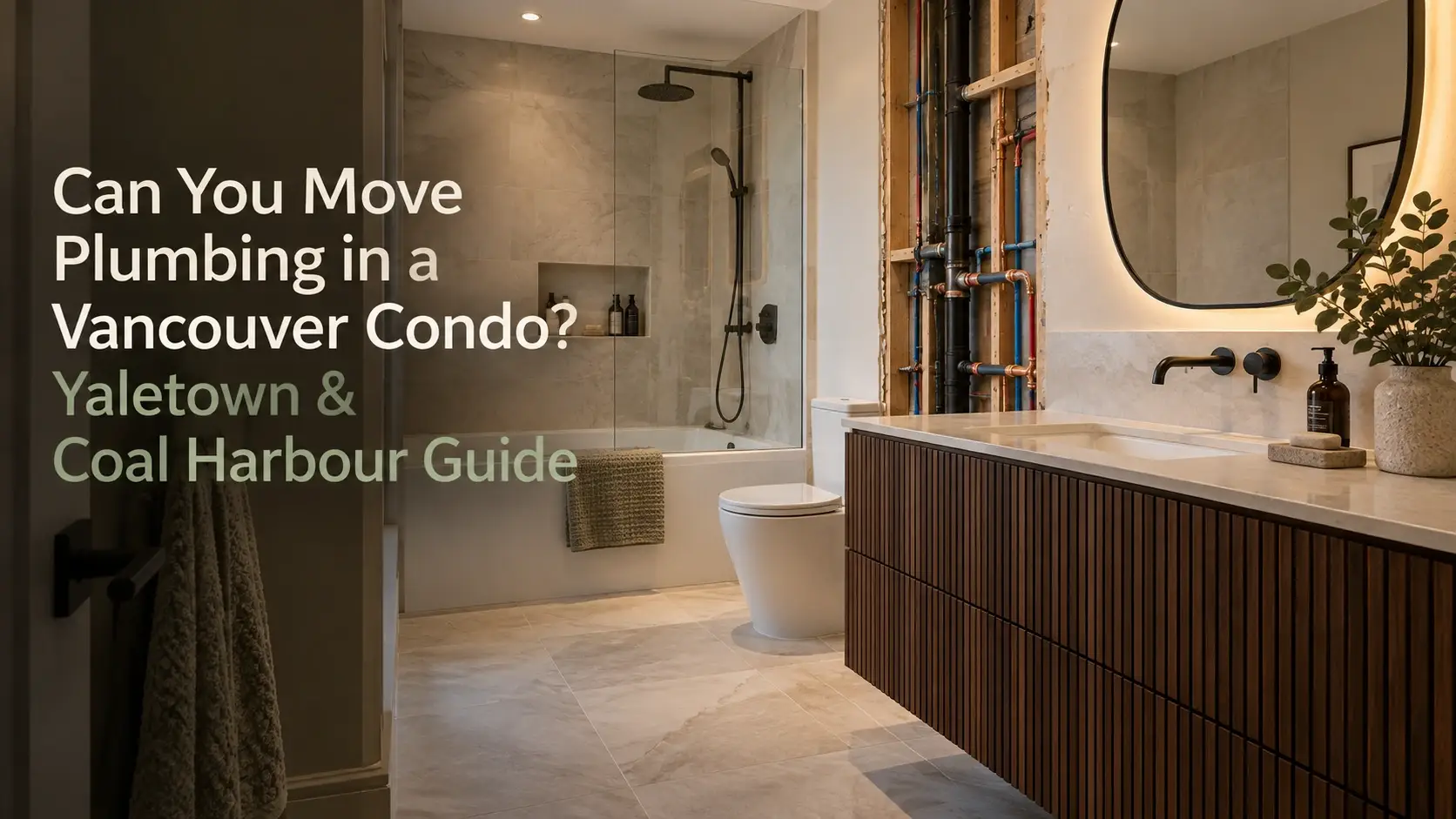
Vancouver condo bathroom renovations often cost more than comparable projects in detached houses, for reasons beyond tile or fixture choices. If you own a Yaletown or Coal Harbour condo, your renovation could cost 20% to 40% more than similar work in a single-family home. Building restrictions, access limitations, and other unexpected factors can drive these additional costs.
Condo bathroom renovations often cost more because of strata rules, restricted work hours, elevator logistics, and shared plumbing systems. Concrete slabs, electrical systems, and administrative coordination can also add expenses absent from many house renovations. Vancouver bathroom renovations typically cost $18,000 to $45,000. Condo projects often range from $20,000 to $45,000, depending on scope, building age, and layout changes.
This article breaks down extra costs, compares condo and house bathroom renovations, explains project timelines, and offers budgeting tips for downtown Vancouver towers.
After reading, you will:
Understand how strata approvals and bylaws translate into real costs and pre-construction delays
Know which plumbing, waterproofing, and electrical items drive condo bathroom renovation budgets higher
Recognize the impact of elevator bookings, noise rules, and limited work hours on labour costs
Learn how to plan timelines and contingencies for condo bathroom projects in Yaletown and Coal Harbour
Be able to compare quotes more effectively by separating building-related costs from visible finishes
Understanding Why Vancouver Condo Bathroom Renovations Cost More
A Vancouver condo bathroom renovation typically involves updating a three-piece or four-piece bathroom inside a high-rise built between the 1990s and 2020s. These buildings often have concrete structural slabs, shared plumbing stacks, common property, and strata corporations governing permitted alterations. These conditions affect renovation costs in Vancouver, from trade requirements to material choices.
Condo bathroom renovation costs depend on two factors: the construction work itself and additional building and strata requirements. In a detached house, you’re mostly paying for the first category. In a condo, both categories carry significant weight.
Yaletown and Coal Harbour feature dozens of high-rise towers, many ranging from 25 to over 40 storeys. However, building age, construction type, strata bylaws, and management policies vary. A 1994 Coal Harbour tower may present different renovation challenges than a 2018 Yaletown building. What they share is the general framework of condo-specific constraints that make renovations more complex and costly.
Condo vs. House Bathroom Renovations in Vancouver
Consider a three-piece bathroom renovation involving new floor tiles, a vanity, plumbing fixtures, shower wall tiles, and lighting. The scope remains identical whether the bathroom is in a Yaletown condo or an East Vancouver detached house.
In the detached house, trades park in the driveway, carry materials inside, and often work extended hours to stay efficient. There’s no strata approval to wait for, no elevator to book, and no concierge sign-in. Staging happens in the garage or yard.
In the condo project, that same scope adds:
Strata approvals and alteration agreement documentation
Elevator bookings and hallway protection with padded walls and floor runners
Restricted work hours and noise limits that shorten each productive day
Shared plumbing and ventilation constraints that limit layout options
Security procedures for every trade entering the building
These factors increase labour time and coordination costs, and may affect permit requirements, even when finishes and floor area remain unchanged.
Physical vs. Administrative Cost Drivers
Physical cost drivers include tile installation, waterproofing membranes, plumbing rough-ins, new fixtures, custom glass enclosures, demolition, finishing, and on-site labour. Hidden conditions like mould, water damage, or outdated plumbing behind shower walls can push these costs higher.
Administrative and logistical costs include strata applications, technical drawings, insurance certificates, elevator bookings, management coordination, WorkSafeBC verification, and loading-dock arrangements. In some downtown Vancouver condos, building administration and logistics may account for 10–20% of renovation budgets, separate from visible finishes.
The first major difference between condo and house renovations begins before demolition, as strata approval can shape the project from day one.
Strata Approval and Building Rules That Affect Costs
Every Vancouver condo has a strata corporation that follows British Columbia legislation outlining when owners need written approval for alterations. Renovation rules vary by building, but work affecting plumbing, waterproofing, floor assemblies, or common systems often requires formal approval. Cosmetic updates, such as repainting or replacing a faucet, may not require approval, while larger bathroom renovations often do.
Your strata corporation may require approval for plumbing, flooring, or fixture changes, affecting your pre-construction timeline and renovation costs.
Strata Bylaws and Alteration Agreements
Most strata buildings in Yaletown and Coal Harbour require an “alteration agreement” or “indemnity agreement” for bathroom work. These documents define the renovation scope, assign liability for common property damage, and require supporting materials. These may include project descriptions, product specifications, contractor insurance certificates, and engineered drawings for certain plumbing or structural modifications.
Preparing this package takes professional time. Some strata councils charge non-refundable application fees of $50–$200 and require security deposits of $500–$2,000. Deposits are typically refundable if no damage occurs to common areas. These are upfront costs that don’t exist in house renovations and directly affect your renovation budget before construction begins.
Approval Timelines and Meeting Schedules
Strata councils typically meet monthly. Missing a submission deadline can delay your project start by four weeks or longer. Strata approval typically adds two to four weeks, and the council may delay your project if it requests more documents or engineering reviews.
These delays can increase costs as trade quotes expire, temporary living arrangements extend, and contractors incur additional project management expenses. Cosmetic updates, such as repainting a powder room or replacing hardware, may receive faster approval. However, waterproofing and plumbing changes often require full strata council review.
Contractor Insurance and Qualifications
Downtown Vancouver strata buildings may require contractors to carry commercial general liability insurance, often with $2 million or more in coverage. Buildings may also request current WorkSafeBC clearance letters, and trade certifications. Smaller renovation firms may lack this coverage, potentially increasing costs for condo owners seeking compliant contractors.
Preparing paperwork, updating insurance certificates, submitting work plans, and providing qualifications adds overhead to condo renovation costs. Contractors factor these expenses into their pricing, helping explain why strata bathroom renovations often cost more than comparable work in detached homes.
Access, Elevator Bookings, and Restricted Working Hours
Basic logistics – getting into the suite, delivering materials, and removing debris – operate very differently in a 30-storey tower than in a detached house. Moving materials into a high-rise condo is more labor-intensive than in a detached house, and the cumulative effect on labour hours is substantial. In Yaletown and Coal Harbour, secure lobbies, concierge desks, dedicated service elevators, and loading bay protocols create a logistical layer that directly increases project costs.
Elevators, Loading Bays, and Parking Constraints
High-rise and mid-rise living requires booking freight elevators and staging materials in designated areas. Service elevators typically must be reserved 48–72 hours in advance, and renovation crews share these with residents moving in and out, furniture deliveries, and building maintenance.
In practice, crews working on a condo project often need to:
Stage materials in a loading bay and shuttle them up in small batches, since there’s no driveway or garage to store supplies
Pay for downtown parking or lose productive time finding legal spots near the building
Spend extra labour hours installing protective padding on elevator interiors, hallway walls, and lobby floors before and after each workday
This extra handling, protection, and coordination is built into the labour portion of condo bathroom renovation costs. For a typical bathroom project, elevator logistics and common-area protection can add a few hundred dollars to several hundred dollars per delivery cycle.
Work-Hour and Noise Restrictions
Many strata buildings enforce construction hours between approximately 8:00 or 9:00 a.m. and 4:30 or 5:00 p.m., Monday through Friday. Saturdays often require special permission; evenings and weekends are generally prohibited. Noisy tasks – demolition, core drilling, tile cutting – may face even tighter windows within those hours.
Compare this with detached houses, where trades can often schedule longer continuous workdays, start earlier, and work Saturdays without permission. In condos, shorter daily work windows increase the total number of days needed to complete the same scope of work, multiplying mobilization time, site visits, and supervision hours. Vancouver condo corporations enforce strict rules that lengthen project timelines, and those longer timelines translate directly into higher labour costs. Labour costs account for 40–50% of total renovation expenses, so even small reductions in daily productivity compound quickly.
Security and Suite Access Procedures
Access controls in downtown towers – fobs, concierge sign-in, escorts to mechanical rooms, key drop systems – add time to every task. Even bringing up a single vanity or removing a bag of demolition debris involves checking in, waiting for elevator access, and signing out.
These procedures are necessary for building security, but they mean that tasks taking 15 minutes in a house can take 45 minutes or more in a high-rise. This additional labour and coordination for access is a hidden but real contributor to higher condo bathroom renovation costs.
Plumbing, Waterproofing, Electrical, and Ventilation in Condos
Beyond logistics, the technical systems shared within high-rises – plumbing stacks, concrete slabs, ventilation ducts, and electrical circuits – create constraints and costs that rarely apply in house renovations. These shared systems can limit your design options and make layout changes significantly more expensive.
Condo Bathroom Plumbing and Fixture Relocation
Most Vancouver condos feature concrete structural slabs, and vertical plumbing stacks run through multiple units along shared “wet walls.” Toilets, tubs, and showers are typically grouped on these walls because of how drainage connects to the building’s main stack.
Moving a toilet or shower drain in a condo may require specialized work and strata approval. In a concrete slab building, plumbing relocation often involves:
Core drilling through structural concrete to reroute drains
Firestopping and acoustic repairs to maintain fire separations and sound insulation between units
Engineering input and a plumbing permit, plus additional building permits if structural concrete is affected
Moving plumbing fixtures can add $5,000 to $12,000 to renovation costs – and that’s just the plumbing rough-in and slab work, before any new floor tile or finishes are installed. In a wood-frame house with accessible floor joists, the same plumbing relocation is typically faster, less invasive, and significantly cheaper.
Waterproofing Requirements and Shared Liability
Waterproofing requirements in condo bathrooms are more demanding than in most houses because a failure doesn’t just affect your unit – it can cause water damage to the suite below. Proper shower membranes, drainage, sealing, and flood prevention are essential for waterproofing in any condo bathroom project.
Many strata councils require documented waterproofing systems, sometimes specifying brand-name membranes, proper slope to the shower drain, and flood testing before tile installation proceeds. Older builds frequently fail modern waterproofing expectations, meaning that shower walls and floors may need full replacement of backer board and membrane – not just new tile over existing surfaces. These requirements push contractors toward higher-end waterproofing products and more extensive prep time than a basic house bathroom typically demands.
Electrical Circuits, Lighting, and Heated Floors
Common condo electrical challenges include limited panel capacity, existing circuits at or near load limits, and longer wire runs from panels located in entry closets far from the bathroom. Adding features like:
Recessed lighting or LED mirrors
Heated floor systems beneath new floor tile
Additional GFCI outlets near the vanity or a double vanity area
can require electrical work including new circuits, panel upgrades, or electrical permits. Permits are required for plumbing, electrical, or structural changes, and building permits can cost approximately $565 for a $30,000 renovation scope in Vancouver. In many high-rises, electricians must follow strict conduit routes and firestopping rules within concrete or steel assemblies, adding time and cost compared to running wire through an open basement in a detached house. The City of Vancouver mandates strict building, plumbing, and energy-upgrade codes, and renovations over $20,000 trigger an EnerGuide evaluation in Vancouver.
Ventilation and Fan Upgrades
Condo exhaust fans are often tied into shared ducts or a central ventilation system. Upgrading a bathroom fan or rerouting ducting may require strata approval and must respect existing duct sizes and fire dampers.
In older towers, inadequate ventilation is common and can cause moisture issues that damage new finishes and create mould risk. Resolving ventilation deficiencies adds cost, but it’s an important investment to protect the durability of your renovation and maintain strata compliance, especially when paired with updated, code-compliant shower renovations in North Vancouver that address moisture and airflow together.
Concrete Slabs and Hidden Conditions in Vancouver Condos
Many Yaletown and Coal Harbour buildings use concrete slab construction with various floor assemblies that differ from older detached houses. Not every condo is built the same way, but there are recurring concealed conditions that become visible only after demolition – and they are among the most common reasons condo bathroom renovation costs exceed initial quotes.
Concrete Floor Assemblies and Tile Prep
Condo bathroom floors typically include multiple layers:
The structural concrete slab
A soundproofing or levelling compound
Existing tile, vinyl, or other flooring material
Removing old floor tile often reveals cracks, uneven substrate, or moisture penetration. Levelling, repairing cracks, or adding acoustic underlay to meet Sound Transmission Class (STC) or Impact Insulation Class (IIC) requirements can add substantial prep labour before new tile installation begins. Houses may have more accessible subfloors – wood joists, crawl spaces – that are easier and cheaper to modify or repair.
Older Plumbing, Leaks, and Previous Renovations
Older Vancouver condos may have hidden issues such as deteriorated substrates or outdated plumbing. Buildings from the 1990s may have aging copper supply lines, older shower valves that don’t meet current standards, or corroding drain connections. More recent buildings might have PEX piping in better condition, but even newer condos can hide problems from previous, undocumented renovations.
Demolition commonly reveals issues similar to those uncovered in many Mississauga bathroom renovation projects, where older plumbing, substrates, and moisture problems only become visible once finishes are removed:
Slow leaks in shower walls that have caused long-term moisture damage
Mould or damaged backer board behind tile
Improper repairs from earlier renovations that weren’t done to code
These issues must be corrected to protect your unit and neighbouring suites. Discovering them mid-project increases cost beyond what was assumed at the quote stage – which is why a contingency budget is essential for any condo bathroom renovation and is a standard part of planning in markets like Seattle bathroom renovations, where older structures and complex systems are also common.
Limits on Invasive Structural Work
Drilling or cutting into structural concrete is tightly controlled in strata buildings. It may require an engineering review, explicit strata permission, and additional inspections. These constraints can force more complex design solutions – building up floors rather than cutting into them, using raised shower bases instead of recessing drains – which increase materials and labour.
These physical constraints and surprise repairs also have a cascading effect on project timelines and scheduling, which is the next major cost driver.
How Building Requirements Affect Project Timelines and Condo Renovation Restrictions
The condo renovation timeline for a bathroom project is consistently longer than an equivalent house project, even when the visible scope of work is identical. Understanding why helps you plan realistically and avoid frustration.
Typical Timeline for a Vancouver Condo Bathroom Renovation
A realistic sequence for a standard condo bathroom renovation in Yaletown or Coal Harbour looks like this:
1–3 weeks: Design decisions, contractor quotes, and strata application preparation
2–4 weeks: Strata review, elevator pre-bookings, and permit applications (plumbing permit, electrical permits, or building permit as required)
3–5 weeks: On-site construction, depending on scope and work-hour limits
Total: approximately 6–12 weeks from design to completion. A basic bathroom refresh takes one to two weeks of on-site work, standard full renovations take two to four weeks, and larger ensuites can take five to six weeks to complete – but add the strata and logistics overhead, and the full project calendar stretches well beyond the construction phase alone, especially when the work involves structural or waterproofing upgrades best handled by a full-scope bath renovation specialist.
By comparison, a detached house bathroom renovation with equivalent scope might take 4–6 weeks total, since approvals, access, and scheduling are more flexible.
Inspections, Permits, and Trade Scheduling
Most bathroom renovations need at least a plumbing permit, and electrical permits are required if you’re adding circuits, heated floors, or new lighting on separate circuits. Municipal inspections must align with strata elevator access windows and work-hour restrictions.
Trades have to be staggered more carefully than in houses because of limited daily work windows and elevator dependency. A plumber may need to wait an extra day for an inspection that a house plumber would schedule for the same afternoon. Waiting on inspections or materials while continuing to pay for site protection and project coordination adds indirect costs that inflate the total cost of the project.
Operating without required permits can lead to double fees up to $20,000, so cutting corners on permitting is not a viable cost-saving strategy.
Material Lead Times in Downtown Projects
Downtown condo owners often select items with longer lead times: custom glass shower enclosures, a frameless glass shower door, large-format premium tile, natural stone surfaces, semi-custom vanities, or specialty plumbing fixtures like a soaker tub or upgraded plumbing fixtures. Material lead times can cause significant renovation delays.
In condos, these delays are more disruptive because elevator bookings, concierge schedules, and neighbour notifications are set in advance. Missing a delivery window can push a project back by days. Ordering critical-path materials before demolition begins – particularly custom tile work, custom millwork, and glass panels – helps keep the bathroom offline for the shortest possible period.
Project Cost Drivers: Yaletown & Coal Harbour Examples
To make these concepts concrete, here are two hypothetical scenarios that illustrate how Vancouver condo bathroom renovation cost builds up compared to house projects.
Example 1: Same-Layout 3-Piece Bathroom Refresh
A Yaletown condo owner renovates a 40-square-foot, 3-piece bathroom. Plumbing stays in the same location – existing fixtures are replaced with new fixtures, including a new vanity, updated shower valve, and modern plumbing fixtures. The shower gets new waterproofing, tile installation on shower walls and floor, and a new glass enclosure. Lighting is replaced like-for-like.
The physical work – tile, waterproofing, fixtures, labour – would cost roughly the same in a detached house. But the condo project adds elevator bookings and hallway protection, strata documentation and application fees, restricted work hours that stretch a two-week job into three weeks, and security sign-in procedures for every trade. A mid-range bathroom renovation in this scenario typically costs between $25,000 and $40,000 in a condo, where the same work in a detached house might fall in the lower portion of that range.
Condo bathroom renovations in Vancouver typically range from $15,000 to $40,000 depending on scope, and this kind of same-layout refresh sits squarely within that band once building-related costs are included.
Example 2: Coal Harbour Bathroom With Plumbing Relocation
A Coal Harbour condo owner wants to convert a tub to a walk-in shower, move the shower drain to a new position, and add heated floors. This is closer to a gut renovation – removing everything down to the concrete slab and rebuilding.
In a concrete slab building, this scope triggers:
Engineering sign-off for slab core drilling to relocate the drain
Firestopping and acoustic detailing to restore fire separations
A plumbing permit and potentially a building permit for the structural modification
Strata approval for all plumbing and waterproofing changes
Additional electrical work for the heated floor systems and possibly a separate shower circuit
Moving plumbing in concrete slab condos adds $5,000 to $12,000 beyond the base renovation cost. The full renovation in this scenario – including premium tile, a custom glass enclosure, heated floors, and upgraded fixtures – can reach $45,000 to $65,000+ in a Coal Harbour tower.
Luxury ensuite renovations can exceed $65,000 in Vancouver when the scope includes a primary ensuite with plumbing relocation, custom tile, and high-end finishes. A comparable full gut renovation in a wood-frame house with accessible joists would cost meaningfully less, primarily because the plumbing relocation and slab work are far simpler, but working with an experienced bathroom remodeler in Vancouver helps keep those structural and system upgrades under control.
Separating “Nice-to-Have” Features from “Must-Do” Repairs
Some costs are discretionary – choosing natural stone over porcelain, adding a separate shower and soaker tub, selecting premium fixtures or custom millwork. Others are mandatory: correcting waterproofing failures, fixing discovered leaks, meeting electrical code, replacing outdated plumbing that doesn’t comply with current standards.
Deciding early which upgrades you can scale back on if concealed issues appear during demolition gives you flexibility. A contingency budget isn’t just a nice idea – it’s essential in condo buildings of any age, and any unused contingency can be redirected into upgraded finishes at the end of the project.
Common Challenges in Vancouver Condo Bathroom Renovations (and Practical Responses)
Many cost overruns and frustrations in condo bathroom projects come from predictable, condo-specific challenges. Recognizing them in advance gives you leverage to control costs through better planning.
Challenge 1: Underestimating Strata Renovation Approval in Vancouver
Condo owners often assume strata approval is a quick rubber stamp, only to face additional questions, conditions, or requests for engineering documentation from the strata council. The strata approval process can add weeks and require documents you didn’t anticipate.
Practical responses:
Review your building’s bylaws and renovation policy well before requesting contractor quotes
Prepare a clear written scope and product list, including waterproofing specifications
Ask strata management exactly what documents they expect from your condo renovation contractor – insurance levels, work plans, drawings, and timelines
Challenge 2: Hidden Damage Behind Showers and Tubs
Older tile installations in Metro Vancouver condos may hide years of moisture damage, especially around tub flanges, shower niches, and areas where caulking has failed. You won’t know until demolition begins, which is why thorough inspections and moisture-aware detailing are central to many North Vancouver shower remodel projects.
Practical responses:
Maintain a realistic contingency budget – adjust the amount based on your building’s age and whether previous renovations were documented
Be prepared to adjust finish choices or scope if subfloor or backer board repairs become necessary
Discuss with your contractor how they handle change orders for hidden damage before the project starts
Challenge 3: Scheduling Around Work-Hour and Elevator Limits
Trades may need to split work across more days due to noise restrictions and elevator availability, which frustrates condo owners expecting house-style timelines.
Practical responses:
Confirm your building’s construction rules before finalizing the schedule with your contractor
Book service elevators and loading bays as early as strata allows
Bundle deliveries and debris removal to reduce trips and costs – each elevator booking is a limited window
Challenge 4: Choosing a Contractor Without Condo Experience
A skilled house renovator may still struggle with strata paperwork, elevator logistics, downtown parking, and the pace of work in a high-rise. Condo renovations can cost up to 40% more than houses partly because they demand specialized coordination skills.
What to ask prospective contractors:
How many downtown condo bathrooms have you completed in the past year?
Are you familiar with the strata renovation approval processes in Vancouver, specifically in buildings like mine?
How do you plan to protect common areas, handle noise windows, and manage building management coordination?
Renovating bathrooms in Vancouver condos costs 20% to 40% more than in most other Canadian cities, and Metro Vancouver trade wages run 20% to 40% higher than the national average – so selecting a contractor who works efficiently within condo constraints is one of the most impactful decisions you’ll make.
How to Budget for a Yaletown or Coal Harbour Condo Bathroom Renovation
Budgeting for condo bathrooms isn’t just about fixture prices and tile selection. Your renovation budget must include building-related costs, strata fees, permit fees, and a realistic contingency for conditions you can’t see until walls come down. Whether you’re planning a Yaletown condo renovation or a Coal Harbour bathroom renovation, here’s how to structure your budget effectively.
Define Your Renovation Scope Clearly
Start by categorizing your project honestly:
Powder room refresh or cosmetic update: New vanity, paint, hardware, minimal tile – typically lower cost and minimal strata interaction
Standard renovation: Full waterproofing, new tile on walls and floor, same layout, updated existing fixtures – the most common mid-range scope
Layout change or full gut renovation: Moving plumbing, adding a walk-in shower or heated floors, new lighting circuits, custom glass – the most complex and expensive category
Each category has a different cost profile and a different level of interaction with building systems and the strata approval process. A powder room refresh might cost a few thousand dollars; a full renovation of a primary ensuite with plumbing relocation can reach $65,000 or more, similar to complex projects handled by dedicated bathroom renovation specialists in Burnaby for older or compact homes.
Account for Building, Strata, and Permit-Related Costs
Include these potential non-construction costs in your bathroom renovation budgets:
Strata renovation application fees or security deposits
City plumbing and electrical permit fees (when applicable)
Elevator booking or security fees charged by the building
Extra protection materials and cleanup for hallways and elevators
Disposal logistics for demolition debris from upper floors
These costs vary by building and project scope, but they are common across downtown Vancouver towers and are a significant reason why renovation costs in Vancouver condos exceed those in detached homes.
Plan a Contingency for Concealed Conditions
Older condo buildings, or units that have had previous renovations of uncertain quality, carry a higher risk of hidden issues – water damage, mould, outdated plumbing, or non-compliant electrical work behind walls. Rather than relying on a single “industry percentage” for contingency, adjust your reserve based on your building’s age, construction type, and scope of work.
Any unused contingency can be redirected into upgraded plumbing fixtures, premium tile, or other finishes at the end of the project – so it’s not wasted money, it’s insurance against mid-project surprises, much like how many North Vancouver bathroom remodels allocate reserves for unforeseen structural or moisture issues.
Request Detailed, Itemized Quotes
Ask your Vancouver bathroom renovation contractors to separate their quotes into clear categories:
Labour and materials for the bathroom itself (tile, fixtures, waterproofing, plumbing rough-in)
Permits and inspection costs
Strata-related administration and logistics
Disposal, common-area protection, and elevator logistics
This transparency helps metro Vancouver homeowners compare quotes fairly and understand exactly why condo projects are priced higher than similar house bathrooms. It also makes it easier to see where your money is going and which line items are negotiable versus fixed, while an experienced Vancouver bathroom renovation contractor can further clarify how local codes and building conditions affect those costs.
A Note on Resale Value
If return on investment matters to your decision, consider that mid-range bathroom renovations return 80–115% of their cost at resale, while master ensuite renovations return 90–130% of their cost. Adding a bathroom to a home can return 110–160% of its cost. However, luxury bathroom renovations return only 60–80% at resale – so spending $80,000 on a bathroom in a condo worth $700,000 may not be financially optimal. Powder room renovations often yield the highest ROI relative to their modest cost, making them an efficient upgrade if you’re renovating with resale value in mind.
Conclusion: Plan for Building Requirements Before Setting Your Budget
Vancouver condo bathroom renovations cost more than similar house projects because of a combination of factors that compound on each other:
Strata approvals, bylaws, and documentation requirements that add weeks and administrative costs
Elevator access, hallway protection, and downtown logistics that increase labour time per task
Restricted work hours and noise limits that stretch timelines and reduce daily productivity
Shared plumbing, electrical, and ventilation systems in concrete towers that make technical work more complex
Hidden conditions discovered after demolition in older or previously renovated units that require unplanned repairs
Understanding these cost drivers before you set a price expectation is the single most important step toward a realistic renovation budget for any condo project in Yaletown, Coal Harbour, or elsewhere in Metro Vancouver.
If you’re planning a bathroom renovation in a Vancouver condo and want to understand how your specific building’s conditions, strata requirements, and layout options affect cost, 4 Local Homes can help you work through the details.
Their team can help clarify project scope, review building-specific constraints, plan materials and waterproofing, and coordinate trades for condo bathrooms – whether you’re considering a cosmetic refresh, a mid-range bathroom renovation, or a full primary ensuite upgrade with plumbing relocation and heated floors. You can learn more about their approach to condo and house bathroom projects on their Vancouver bathroom renovation contractor page.
Your practical next steps:
Request your building’s strata renovation guidelines and current bylaws before finalizing any design decisions
Decide whether you’ll keep plumbing in the same location or relocate major fixtures – this single decision has the largest impact on cost
Confirm whether plumbing, electrical, or building permits will be required for your specific scope
Gather 2–3 detailed, itemized quotes from contractors experienced with condo renovations in Vancouver rather than relying on per-square-foot averages
Set aside a contingency based on your building’s age and the scope of demolition planned