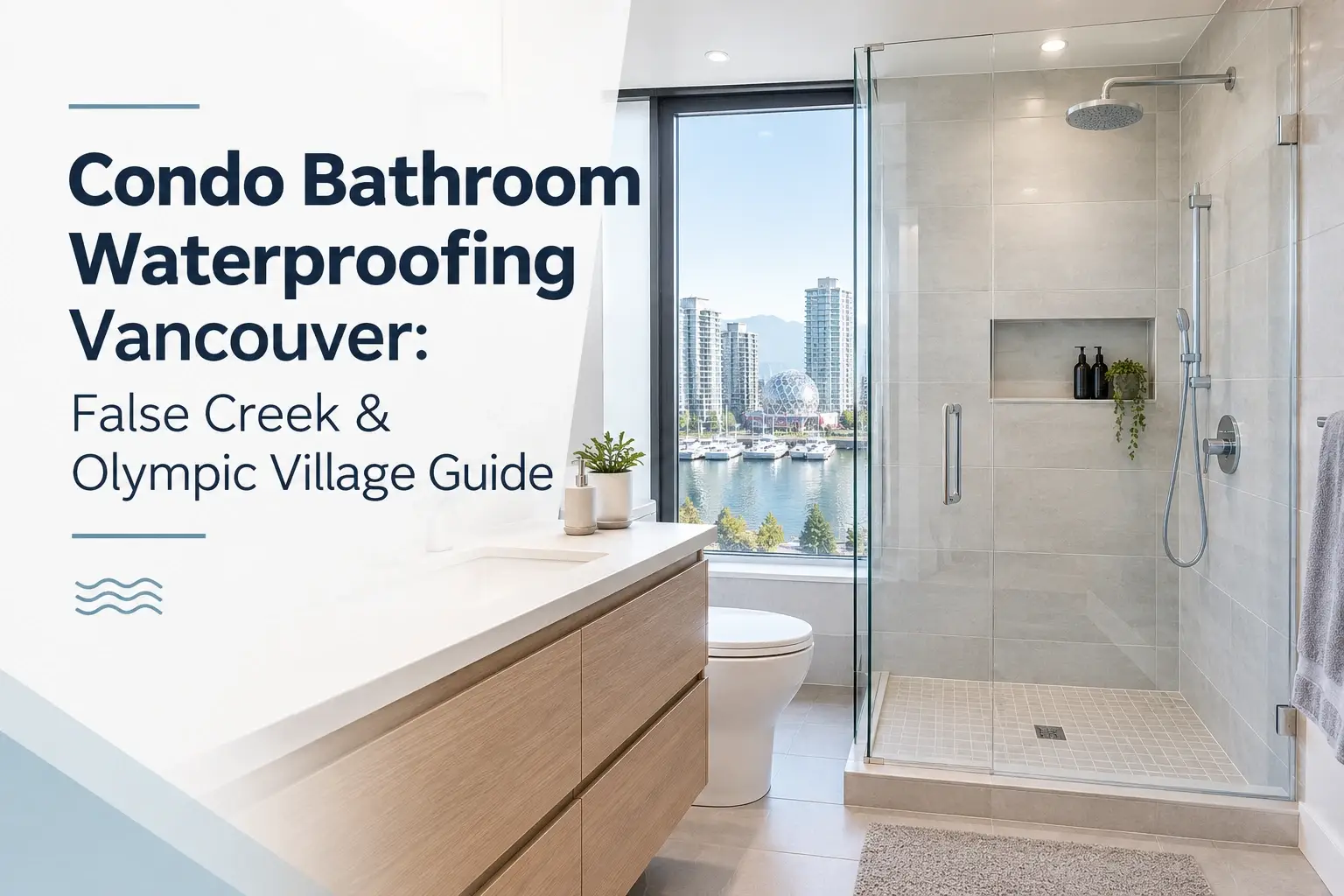
Introduction: Bathroom Renovation Considerations in False Creek and Olympic Village
A bathroom renovation in False Creek or Olympic Village differs greatly from renovating a detached home. In these waterfront communities, strata bylaws, shared plumbing, elevator rules, noise limits, and compact layouts guide every decision.
Before choosing tiles or fixtures, condo owners must complete three critical preparation steps to ensure a smooth project. First, review your strata bylaws and alteration agreements carefully to understand all building restrictions and requirements. Next, confirm renovation policies with your property manager, focusing specifically on permitted working hours and elevator access. Finally, plan carefully around space and infrastructure limits imposed by concrete-slab construction and vertical plumbing stacks.
Skipping any of these essential preparation steps risks severe delays, heavy fines, or outright application rejections. That said, this guide helps False Creek and Olympic Village condo owners navigate bathroom renovations safely and effectively. Furthermore, we focus on strata approvals, building logistics, moisture control, budgeting, and contractor coordination rather than DIY tips.
Key Takeaways
By the end, you’ll understand:
How condo-specific strata rules and building permit requirements affect your renovation scope
How to plan a functional layout for a compact Vancouver condo bathroom
Why proper waterproofing and ventilation are non-negotiable in coastal buildings
How to budget realistically – including contingencies for hidden conditions
How to coordinate contractor access, deliveries, and timelines in a multi-unit building
Understanding Condo Bathroom Renovations in Vancouver
A typical False Creek condo bathroom renovation includes replacing fixtures, re-tiling, upgrading ventilation, waterproofing, improving lighting, and tweaking layouts. However, these changes must strictly align with shared building system constraints.
Unlike detached home renovations, condo projects require working around shared plumbing stacks and common walls. Consequently, every single stage demands strict strata oversight and compliance.
Every building in these neighborhoods has its own renovation rules and technical limitations. A 2010 Olympic Village tower built to LEED certification standards may impose environmental, acoustic, and material requirements that don’t exist in a 1990s False Creek low-rise – and vice versa. Understanding your building type is the first step toward a successful renovation.
How Condo Renovations Differ from House Bathroom Projects
The most immediate difference is governance. In a condo, your strata council controls what you can and can’t do to your unit. You’ll need written approval before construction begins, and that approval process often requires submitting detailed drawings, contractor insurance, and a signed alteration or indemnity agreement. In a house, you answer primarily to the city’s permitting office. In a condo, you answer to both.
Structural and mechanical constraints add further complexity. Most bathroom renovations in Vancouver condos involve concrete slabs with embedded or sub-slab drainage. Vertical plumbing stacks are typically located in shared party walls or concrete shafts, meaning plumbing relocation – especially moving a toilet drain – is often extremely difficult, expensive, or outright prohibited by your strata. Shared mechanical ventilation systems, sprinkler lines, and fire-rated assemblies all limit what can be cut, drilled, or rerouted.
The consequences of mistakes are also amplified. A water leak in a detached home damages your own property. In a condo, inadequate waterproofing can send water into units below, triggering insurance claims, strata enforcement, and legal liability. These constraints don’t make renovation impossible – they make planning essential.
Why Location Matters: False Creek & Olympic Village Building Types
False Creek features diverse buildings from the 1980s alongside modern Concord Pacific and Yaletown high-rises. In addition, older properties often contain outdated plumbing, compromised waterproofing, and hidden water damage beneath walls and tubs. Plumbing in these buildings may be more fragile, and strata rules may be tighter around altering original systems.
Olympic Village towers, built between 2010 and 2020, were constructed to high sustainability and green building standards as part of Vancouver’s environmental targets. Many are LEED-certified, which can affect permitted heating systems, water fixtures, materials, and even ventilation or energy consumption during renovation. These newer buildings often have stricter acoustic and environmental requirements, but their plumbing and waterproofing are typically more modern and better documented.
These differences are captured in each building’s strata bylaws and renovation guidelines – which is exactly why owners must review their own building’s rules before committing to any scope of work.
Know Your Strata Rules and Building Requirements Before You Start
Reading your strata bylaws, renovation policies, and alteration agreement is the mandatory first step in any bathroom renovation Vancouver condo owners undertake. Requirements are not identical across all False Creek and Olympic Village buildings. What one strata council permits freely, another may restrict or prohibit. Always confirm details with your own strata council or property manager before making design decisions or booking contractors.
Review Strata Bylaws, Rules, and Renovation Policies
Start by obtaining the full set of strata bylaws, any renovation guidelines specific to your building, and the alteration agreement or indemnity agreement your strata uses. Under BC’s Strata Property Act, Standard Bylaw 5 addresses alterations to fixtures original to the developer – including plumbing, floor coverings, and wall coverings – and typically requires written strata approval before work begins.
Common bathroom restrictions include approved waterproofing systems, like specific membrane types. Additionally, stratas often regulate heated floors, under-floor modifications, and plumbing relocation. Furthermore, licensed contractors must perform all work requiring code permits.
Before approving a condo bathroom renovation, many stratas require detailed drawings and scope of work. Moreover, owners must submit proof of contractor liability insurance, commonly $2 million or more. Some False Creek and Olympic Village stratas require refundable damage deposits ranging from $1,000 to $5,000.
Confirm Work Hours, Noise Rules, and Elevator Bookings
Work-hour windows in Vancouver condos are typically limited to weekday daytime hours – often 8:00 AM to 5:00 PM – with no noisy work on weekends or statutory holidays. However, these restrictions vary by building, so verify specifics with your property manager before scheduling demolition or tile work.
In Olympic Village towers and many False Creek high-rises, you’ll need to reserve the service elevator in advance for material deliveries, fixture installation, and debris removal. Buildings may charge fees or require deposits, and elevator padding is often mandatory. Some strata councils require advance notice to neighbors for noisy work like concrete drilling or tile demolition – a courtesy that also reduces the risk of complaints.
Permits, Insurance, and City Inspections
The City of Vancouver requires a plumbing permit when you install, change, or upgrade any part of a plumbing system, or when moving fixtures or drains. Replacing fixtures in their existing location usually does not require a plumbing permit. Electrical changes likewise need permits, and structural changes or alterations to floor or ceiling assemblies may require a building permit.
It’s important to understand that strata approval and municipal permits are separate requirements – one does not replace the other. Both may be needed, and strata councils often require copies of all city permits before granting their own approval. Key documents your strata and city may request include contractor liability insurance, WorkSafeBC registration and clearance, and copies of issued permits. The City of Vancouver also maintains a Multi-Unit Residential Building Renovation Application Checklist (updated March 2026) that outlines required documents for permit applications in multi-unit buildings.
Permit and bylaw limits should shape your early design decisions rather than being treated as an afterthought. Understanding what’s allowed – and what requires special approval – before you finalize your layout will save weeks of delays and potential rework.
Plan a Functional Bathroom Layout for Compact Vancouver Condos
Most bathroom renovations in False Creek and Olympic Village condos involve rooms between 35 and 55 square foot, where every inch of layout, fixture placement, and storage matters. In spaces this compact, a well-planned bathroom layout enhances daily comfort and usability far more than decorative upgrades alone.
Layout decisions are directly tied to the constraints discussed above: existing plumbing locations, ventilation pathways, slab limitations, and strata rules. A smart layout works with these realities rather than fighting them.
Assess What You Can Move (and What You Probably Can’t)
Moving a toilet in concrete-slab condos is difficult because relocating drain stacks requires major engineering and strata approval. Additionally, this plumbing relocation can add $2,000 to $6,000 or more to project costs, leading many stratas to deny requests.
Sinks and showers generally offer more flexibility in location, but they’re still limited by venting requirements and drainage slopes. Code requires minimum slope for drain lines; improper slope leads to slow drains and backups. Any changes to venting paths must maintain code compliance, which typically requires a licensed plumber and may trigger city inspections.
For example, a practical approach in an Olympic Village tower involves keeping the toilet in its current place. You can convert an alcove tub into a walk-in shower directly along that same wall. This strategy maintains the existing drain layout while greatly improving the room’s overall function and feel.
Space-Saving Vanities, Showers, and Storage Solutions
Wall-hung and shallow custom vanities are popular in Vancouver condo bathrooms. They open up floor space and simplify cleaning. Additionally, floating vanities create the illusion of a larger room. Furthermore, their widths can be custom-tailored to fit narrow spaces near plumbing stacks or shared walls.
Meanwhile, tub-to-shower conversions are common in older False Creek condos and North Vancouver. Replacing alcove tubs with walk-in showers frees up substantial physical and visual room. However, curbless options require precise drainage and waterproofing. Ultimately, some strata boards may restrict threshold changes or enforce strict waterproofing regulations. Renovation projects often require permits for plumbing or electrical changes when altering a shower’s drain location or size.
For storage, recessed or mirrored cabinets, shower niches, and over-toilet shelving save space without protruding into limited room. Additionally, custom cabinetry fits exact dimensions in compact condo bathrooms, which greatly improves both functionality and visual clarity.
Lighting, Mirrors, and Color to Make Small Bathrooms Feel Larger
Layered lighting makes a measurable difference in compact bathrooms: vanity task lighting for grooming, overhead ambient lighting for general use, and optional shower lighting for safety and aesthetics. Be aware that electrical changes – such as relocating ceiling pot lights or adding new circuits – may require permits and a licensed electrician, particularly in strata-governed buildings.
Large mirrors, light-colored tile, and frameless glass shower enclosures reduce visual barriers and make a 40 square foot condo bathroom in Olympic Village feel considerably more open. Large-format tiles are popular for modern renovations in Vancouver because they minimize grout lines and create a cleaner visual field. Warm earth tones are becoming increasingly popular in Vancouver bathroom designs, though many homeowners in resale-oriented units prefer timeless, neutral palettes.
Thoughtful design choices should support proper ventilation and water management – a topic that deserves its own detailed discussion.
Address Waterproofing, Ventilation, and Plumbing Limitations
Water damage in a condo bathroom renovation Vancouver setting can affect units above and below yours, making proper waterproofing and ventilation non-negotiable. Inadequate waterproofing is the leading cause of renovation failures in multi-unit buildings, and proper waterproofing can extend a renovation’s lifespan to over 20 years. Vancouver’s coastal climate and persistent humidity make proper detailing especially important in False Creek and Olympic Village towers near the seawall, where moisture behind tiles can lead to mould and structural damage.
Waterproofing Expectations in Vancouver Condos
Waterproofing is typically required in all wet areas: shower floors and walls, tub surrounds, and sometimes the entire bathroom floor – particularly when an occupied unit sits below yours. A complete waterproofing system protects critical transition areas from moisture. Common systems include sheet membranes and liquid-applied membranes installed over cement or fiber-cement backer boards. Waterproofing membranes are essential before tile installation. Waterproofing systems like Schluter-KERDI are recommended to prevent mold.
Many stratas require specific approved waterproofing systems or their equivalents, and some mandate flood testing – filling the shower pan with water for 24 hours – before tiling proceeds. Always confirm your strata’s requirements and inspection steps before tile installation begins. Demolition and waterproofing are critical first steps in renovations, and cutting corners here creates both legal and insurance exposure.
Ventilation, Fans, and Moisture Control
Many condo bathrooms in False Creek and Olympic Village lack operable windows, making mechanical ventilation essential. Properly sized and ducted exhaust fans must vent to the building exterior – not recirculate air back into the unit. Proper ventilation and vapor barriers are crucial in Vancouver’s wet climate.
Some Olympic Village buildings have centralized ventilation systems. Any changes to shared ducts must comply with building engineering requirements and may be restricted entirely. Practical tips include installing timers or humidity-sensing controls on exhaust fans to ensure operation continues after the user leaves, sealing all penetrations so moisture doesn’t migrate into slabs or wall cavities, and keeping duct runs as short and straight as possible.
Working With Existing Plumbing and Access Panels
Vertical plumbing stacks in common walls are shared infrastructure. Access panels that allow building maintenance access to cleanouts and shared stack components must remain accessible – tiling over or covering these panels is typically prohibited by strata rules.
In older False Creek buildings, original copper supply lines or galvanized and cast-iron drains from the 1990s may still be in service. Older homes may contain hazardous materials that require pre-renovation assessments. If plumbing components are exposed during your renovation, upgrading accessible sections is worth considering to avoid future leaks and costly repairs. Licensed contractors should assess condition and code compliance, and any drain work must maintain proper slope and pipe sizing – requirements verified through city inspections when permits are issued.
Waterproofing and plumbing choices should drive your selection of tile, grout, and finishes – not the other way around.
Choose Durable Materials and Finishes for Vancouver’s Coastal Climate
In a bathroom renovation Vancouver’s damp climate demands materials that handle frequent moisture, resist mold, and require minimal ongoing maintenance. Strata requirements or acoustic guidelines may further influence what you can install on floors and walls, particularly in units above other occupied suites.
Flooring and Wall Surfaces That Stand Up to Humidity
Porcelain and ceramic tile remain the default choices for condo bathroom floors and wet walls. Porcelain resists water absorption and is suitable for shower floors and walls. Floor tile should have adequate slip resistance for wet surfaces. Large-format tiles are popular for modern renovations in Vancouver because they reduce grout lines, simplify cleaning, and visually expand small rooms.
Luxury vinyl tile or other resilient flooring may be acceptable outside primary wet zones, and sometimes throughout the bathroom if permitted by your strata – but a moisture barrier underneath is essential. Solid hardwood is rarely used in wet or damp zones due to swelling and warping risk.
Sound-transfer concerns matter in multi-unit buildings: tile over concrete can transmit noise to units below. Some buildings require acoustic underlayment or soundproof membranes, especially in units above other occupied suites. Check your strata’s acoustic rules before finalizing flooring.
Fixtures, Hardware, and Glass for Condo Bathrooms
Practical plumbing fixtures should prioritize water efficiency, ease of cleaning, and compatibility with existing rough-in sizes to avoid costly plumbing relocation, especially when working with specialized bath remodel contractors. Water-efficient fixtures help reduce water consumption and utility costs, and low-flow toilets and efficient showerheads are increasingly expected in Metro Vancouver’s sustainability-conscious market. Backlit mirrors and low-flow plumbing fixtures are standard in upgrades.
Frameless glass shower enclosures give a clean, open look that works well in small bathrooms, but require thicker tempered glass, careful sealing, and may be subject to strata rules about weight or glass type. Framed enclosures are more budget-friendly and still effective. For resale-oriented units in Olympic Village and False Creek, timeless finishes like chrome or brushed nickel tend to have broader appeal. Corrosion-resistant hardware is important in coastal climates where salt air accelerates wear.
Grout, Sealants, and Low-Maintenance Details
Stain-resistant or epoxy grout in tile joints resists mildew and staining – a practical advantage in Vancouver’s humid environment. Keep grout joints as narrow as feasible; large-format tiles naturally minimize grout area. Sealed thresholds between wet and dry zones prevent water migration.
Shower niches and shelves should be built with correct slope to drain; flat shelves that collect standing water invite mold. Solid-surface thresholds or prefabricated pans avoid materials that absorb water. Use professional-grade, mildew-resistant silicone sealant around fixtures, and plan for periodic re-sealing as part of ongoing maintenance. High-quality materials enhance durability and reduce future repairs – and durable finishes may cost more upfront but reduce long-term maintenance issues significantly.
Budget for Bathroom Renovation Costs and Unexpected Issues
Bathroom renovation cost in Vancouver condos varies widely depending on scope, building constraints, finish level, and the condition of existing infrastructure behind your walls, and comprehensive bathroom renovation services often address these factors from the inside out. Exact pricing requires project-specific quotes, so treat published ranges as general guidance rather than guarantees. A contingency fund of 15% to 20% of the budget is advisable for unexpected costs – especially in older False Creek buildings where hidden conditions are common.
Key Cost Drivers in Vancouver Condo Bathroom Renovations
The core factors that influence your final price include:
Demolition and disposal: Removing tile, shower surrounds, and old fixtures in a condo requires a careful waste strategy – smaller loads hauled via service elevators, protective corridor padding, and coordination with building management all add cost.
Labour: Licensed contractors in Metro Vancouver charge premium rates. Plumbers typically bill $100–$200 per hour; tile work labour runs $12–$25 per square foot. Labour often represents 40–55% of total project cost.
Materials and finishes: Porcelain tile, quartz countertops, custom cabinetry, and frameless glass enclosures all vary significantly in price. Material selections should balance durability, aesthetics, and budget.
Plumbing and electrical work: Major plumbing relocations – especially moving a toilet or shower drain in a concrete-slab building – are among the biggest cost escalators, sometimes adding $2,000–$6,000 or more. Electrical changes for new lighting, heated floors, or fan upgrades also add to scope.
Permits, inspections, and strata overhead: Strata approval fees, damage deposits, required insurance documentation, and city plumbing or electrical permits each add cost and time.
Working in high-rise Olympic Village towers can add further time and cost due to elevator bookings, limited staging space, and stricter protection requirements compared to low-rise or North Vancouver homes undergoing bathroom remodels and West Vancouver homes.
Scope Choices: Refresh vs. Full Rebuild
Understanding the difference between a cosmetic refresh and a full bathroom renovation helps you align scope with budget:
|
Scope Level |
Typical Work |
Approximate Range |
|---|---|---|
|
Powder room refresh |
New vanity, toilet, lighting, minor flooring |
$5,000–$12,000 |
|
Full bathroom renovation (existing layout) |
New tile, fixtures, waterproofing, ventilation |
$10,000–$20,000 |
|
Master ensuite renovation |
Higher-end finishes, possible layout changes |
$20,000–$35,000 |
|
Premium or luxury renovation |
Layout changes, custom cabinetry, heated floors, curbless shower, spa-inspired features |
$40,000–$75,000+ |
Bathroom renovations in Vancouver typically start at $30,000 for comprehensive projects that include significant scope. Staying within the existing layout generally controls costs and may simplify permits and strata approvals. Prioritize long-lasting upgrades – waterproofing, ventilation, and good-quality plumbing fixtures – before investing heavily in purely decorative elements. Energy-efficient fixtures can lower utility bills over time, adding practical value beyond aesthetics.
Planning for Contingencies and Hidden Conditions
Common surprises in Vancouver condos include past water damage, mold behind old shower surrounds, corroded plumbing fittings, non-compliant work from previous renovations, uneven subfloor conditions, and – in older buildings – potentially hazardous materials in tile adhesives or backer boards. A full bathroom renovation includes demolition, plumbing, and electrical work that may reveal conditions invisible during initial assessment.
Owners should be prepared to pause and approve scope and budget changes if such conditions are discovered once tile and drywall are opened. Bathroom renovation timelines vary from 3 to 8 weeks for most bathroom renovations, with standard full renovations typically taking 3 to 6 weeks. A standard full renovation can take several weeks once work begins, and unexpected repairs can extend both timelines and budgets. Contractor availability in Vancouver can also impact renovation timelines, particularly during peak spring and summer seasons.
Coordinate Contractor Access, Deliveries, and Renovation Timelines
Logistics can make or break a Vancouver condo bathroom renovation, especially in dense neighborhoods like False Creek and Olympic Village where street parking is scarce, loading bays are shared, and elevator access is limited. Aligning contractor schedules with strata rules, elevator availability, and neighbor expectations is essential to keeping your project on track.
Scheduling Work in Multi-Unit Buildings
The typical sequence for a condo bathroom renovation follows a clear progression: design and strata approvals → city permits (if required) → contractor scheduling → demolition → rough-in plumbing and electrical work → inspections → waterproofing → tile and flooring installation → fixture installation → finishes, painting, and final walkthrough.
Work-hour restrictions and noise rules in False Creek and Olympic Village buildings stretch the calendar compared to a detached house project. Most strata councils prohibit loud demolition or drilling outside restricted weekday windows, and weekend work is generally disallowed. Proactive clear communication with neighbors on directly adjacent walls or floors – particularly during demolition and drilling stages – reduces complaints and helps maintain good building relationships. Strata councils often dictate renovation timelines and requirements in multi-unit buildings, so factor this governance into your schedule from the start.
Managing Deliveries, Waste, and Elevator Use
Large deliveries of tile, glass panels, and fixtures need to be coordinated through loading bays and service elevators, often with booked time slots arranged days or weeks in advance. Some buildings charge for elevator padding and corridor protection; damage deposits may be required.
Debris removal must follow building procedures – many buildings disallow large dumpsters in public areas, requiring smaller, more frequent loads hauled via service elevator. Protective floor coverings and elevator padding prevent fines or damage charges. Material storage within the unit is limited; deliveries should be scheduled so materials arrive when they can be installed promptly, avoiding clutter and delays. Glass panels and large tile formats are especially delicate and need careful handling in confined corridors.
Working With Professional Support (Including 4 Local Homes)
An experienced renovation team can coordinate trades, handle permits, manage strata communication, and oversee on-site logistics – reducing the risk of miscommunication, strata pushback, and cost overruns that many homeowners encounter when managing renovation projects independently.
4 Local Homes is a Vancouver-based renovation company that manages whole-home and multi-room renovation projects from planning through construction, including structural modifications, trade scheduling, permit coordination, and detailed finish installation, with a strong focus on professional home improvement services. For condo owners preparing a bathroom renovation in False Creek or Olympic Village, their start-to-finish approach can help navigate building-specific logistics and keep work organized. A detailed quote is provided before any work begins, supporting transparent pricing and informed decision-making.
Careful planning combined with the right professional support leads to smoother condo bathroom renovations – fewer surprises, shorter timelines, and a finished bathroom that performs well for years.
Common Condo Bathroom Renovation Challenges and Practical Solutions
Vancouver condo owners in False Creek and Olympic Village tend to encounter the same categories of problems during bathroom renovations. Knowing what to expect – and having a plan for each – makes the difference between a stressful remodel and a successful renovation.
Challenge 1: Strata Approval Delays
Incomplete applications are the most common cause of strata approval delays. Missing drawings, absent insurance documentation, or unclear scope descriptions force strata councils to request revisions, pushing timelines back by weeks. The solution: submit a complete package early – including contractor insurance, WorkSafeBC clearance, detailed scope of work, and any required drawings – and allow two to six weeks in your schedule for the approval process. Avoid ordering custom materials or booking trades until approval is secured.
Challenge 2: Noise and Neighbor Complaints
Tile demolition, concrete drilling, and hammering generate significant noise in high-density buildings. Even within permitted hours, prolonged disruption can strain neighbor relationships. The solution: schedule the noisiest work during allowed hours in concentrated blocks, communicate timelines with neighboring units in advance, and keep workspaces clean and hallways clear. Using dust barriers and vibration-dampening tools further reduces impact on daily life for surrounding residents.
Challenge 3: Discovering Hidden Water Damage
Once tile and drywall come off, it’s common to find soft subfloors around tubs, mold behind old shower surrounds, corroded fittings, or evidence of non-compliant work from previous renovations. Moisture behind tiles can lead to mould and structural damage that wasn’t visible before demolition. The solution: rely on your contingency fund, prioritize structural and waterproofing repairs over aesthetic upgrades, and document all damage thoroughly. If applicable, consult your strata’s insurance provisions to understand whether any discovered damage may be covered.
Challenge 4: Material Lead Times and Backorders
Specialty tile, custom glass enclosures, and made-to-order vanities can have lead times of several weeks – a common issue in Vancouver’s active renovation market. Delays in material arrivals can stall construction at critical points. The solution: finalize all material selections before demolition begins, confirm lead times with suppliers, and identify locally stocked backup choices for items with uncertain delivery dates. Open communication with your designer and contractor about expected timelines helps keep the project moving.
Conclusion: Plan Your Vancouver Condo Bathroom Renovation With Confidence
A well-planned bathroom renovation Vancouver condo owners can rely on starts long before construction begins – with strata research, realistic budgeting, and smart decisions about layout, waterproofing, and materials. In False Creek and Olympic Village, the unique challenges of multi-unit living – from elevator logistics to shared plumbing stacks – reward owners who invest time in preparation. Bathroom renovations can increase home value significantly, and a well-planned bathroom remodel offers a strong return on investment when infrastructure and finish quality are balanced.
Here are the practical next steps to move your project forward:
Gather your strata documents – bylaws, renovation guidelines, and alteration agreement – and review them thoroughly.
Define your scope and budget – decide between a cosmetic refresh and a full rebuild, and build in a 15–20% contingency.
Consult with qualified professionals – engage licensed contractors experienced with Vancouver condo renovations.
Confirm permit requirements – check with the City of Vancouver and your strata council to determine what permits and approvals are needed.
Schedule around building rules – book elevators, coordinate with neighbors, and align your timeline with strata-permitted work hours.
Condo owners planning a bathroom renovation can explore the services and renovation process available through 4 Local Homes as they prepare for their project. Their whole-home renovation approach – covering planning, permits, trades coordination, and finish installation – is designed for Vancouver homeowners undertaking significant updates, including bathroom renovations in multi-unit buildings.
Start planning early, respect your building’s rules, and work with experienced professionals. A False Creek or Olympic Village bathroom renovation done right delivers comfort, durability, and lasting value.
Additional Resources for Vancouver Condo Owners (Optional)
For owners who want to dive deeper into regulations and planning:
Review the City of Vancouver’s official information on building and plumbing permits for residential renovations to understand current requirements.
Request your building’s specific renovation handbook or alteration agreement from your strata council or property manager – these documents contain building-specific rules that override general guidance.
Explore broader renovation guides and project examples on 4 Local Homes to understand how a bathroom renovation might fit into a larger condo or whole-home upgrade plan, including options for full home remodels in Vancouver.
Smart technology features – including heated flooring, digital shower controls, and spa-inspired wet rooms that combine showers and tubs into open-concept spaces – are worth researching if your scope and budget allow. Sustainability is a priority among homeowners in Metro Vancouver, and sustainable materials are in increasing demand for bathroom renovations across Vancouver BC.